Call Today: 916-259-1868

What Are the Top 10 Types of Moving Coil Actuators?

Moving coil actuators turn electrical current into controlled motion, often with fast response and precise positioning. They appear in optical equipment, test rigs, miniature automation, and vibration-control systems. The phrase “moving coil actuator” covers several designs, not one standardized product family. Some units move linearly; others produce rotary motion or guide a load through a flexure. The categories can overlap. That is worth remembering when comparing products.

Industrial demand offers useful context, though it does not measure this actuator type directly. The International Federation of Robotics reported 4,281,585 industrial robots operating worldwide in 2023, with 541,302 new installations that year (World Robotics 2024). Those figures show the scale of automation applications where compact, responsive motion components may be relevant. They do not prove that moving coil actuators are used in every robot or that their market is growing at the same rate. A careful comparison needs more than market headlines.

This guide examines ten common types, including voice-coil, tubular, planar, rotary, iron-core, and slotless designs. It compares their motion, force characteristics, travel, guidance, and typical uses. Small details matter: a coil’s heat, a flexure’s stiffness, or a cable’s drag can change real-world performance. The categories are not perfectly tidy, and selection depends on the complete mechanism. That is the practical point.
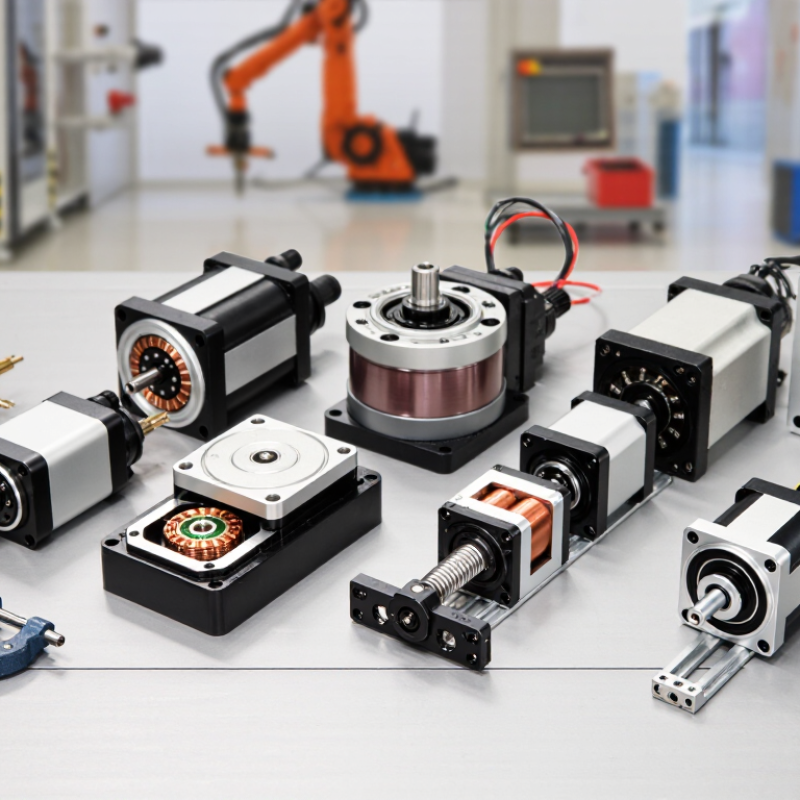
What Are the Top 10 Types of Moving Coil Actuators?

How Moving Coil Actuators Produce Controlled Motion

Moving coil actuators convert electrical current into controlled mechanical motion. A coil sits inside a magnetic field, often created by permanent magnets. Current flowing through the coil produces force, moving it along a guided path. Reverse the current, and the force changes direction. The principle is simple. The control is not.

Changing current changes the force and can adjust speed or position. A controller may use position sensors to compare actual movement with the target, then correct the current. This feedback helps a voice-coil actuator move a camera lens a few millimeters or position a small valve. Small moves matter. Without feedback, load changes or friction can make motion less predictable.

Different designs shape the movement: linear models travel along a straight axis, while rotary versions produce limited angular motion. Some provide short, rapid strokes; others are built for smoother, more measured travel. Direct drive can reduce backlash because there are fewer transmission parts, but it does not remove every source of error. Coil heating, guide friction, and mounting alignment still affect performance. These details are easy to underestimate. A carefully chosen actuator needs a suitable current driver, a well-supported moving load, and enough time to settle at its target.
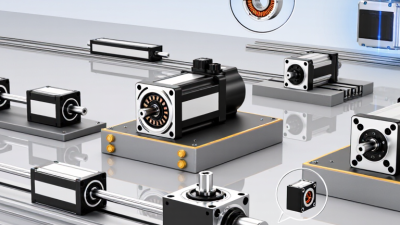
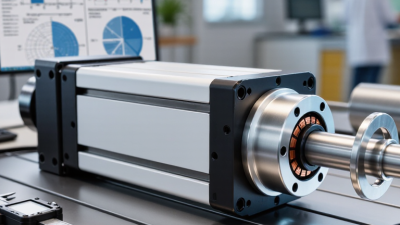
Linear Types: Tubular, Flat, and Planar Actuators

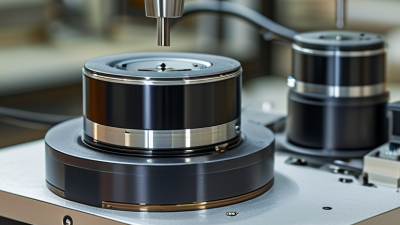
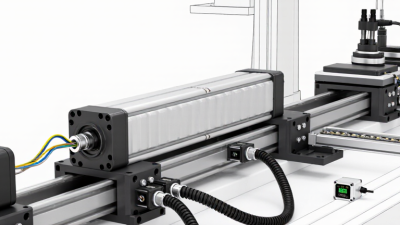
Tubular moving-coil actuators place a cylindrical coil inside a surrounding magnetic assembly. Current pushes the coil along the tube, producing direct linear motion without gears. Their enclosed shape suits compact stages, focusing mechanisms, and valve positioning. Alignment matters: a poorly supported moving load can rub or tilt, even when the actuator itself is accurately made.

Flat actuators arrange coils and magnets across opposing flat surfaces. They can fit beneath a platform or beside a short-travel slide, but the guide system must handle side forces.

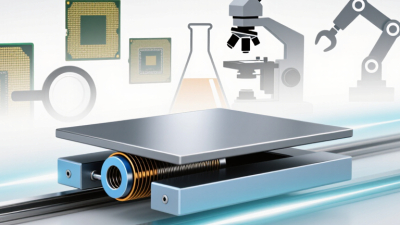
Planar actuators spread magnetic elements across a wider surface; some designs support motion in more than one direction. That wider workspace can help with positioning small parts on a table. Not always simpler. Real performance depends on the stroke, heat removal, wiring, and load—not just the actuator’s outline.

A useful selection check is to compare the force needed throughout the working range, then test the assembly under its actual load. Neat diagrams can hide awkward cable bends or mounting flex. Those details deserve attention.

Guided Types: Flexure-Guided and Bearing-Guided Actuators

Flexure-guided and bearing-guided actuators are two common ways to control a moving coil’s path. A flexure guide uses thin, elastic members that bend as the coil moves, rather than sliding against a rail. This creates nearly frictionless motion without guide lubrication. Travel is usually limited, however, and repeated bending can cause material fatigue. They bend slightly.

Bearing-guided actuators support the coil carriage with linear bearings or bushings. They can accommodate longer strokes and side loads, making them useful when a payload must travel several millimeters or more. Their moving contacts introduce friction, wear, and possible noise. Alignment matters: even a slightly skewed rail can cause binding and uneven force. Smooth travel matters. In practice, the choice is not always tidy; stiffness, stroke, load, and service life interact. Measure the real load, not just the actuator’s rated force.

Tips: Check the guide’s rated side load and permitted stroke before selecting an actuator. Keep flexures within their specified travel, and inspect bearing play during maintenance. A slow-speed test can reveal rubbing early.

Rotary Types: Limited-Angle, Galvanometer, and Torque Actuators

Rotary moving-coil actuators turn electrical current into controlled angular motion. Limited-angle types move through a small arc rather than completing continuous rotation. They suit mirror steering, valve positioning, and optical adjustments where a few degrees matter. The coil sits in a magnetic field, and current direction determines torque direction. Motion can feel quick and smooth. But the available angle, load, and heating limit performance.

Galvanometer actuators are a specialized option for precise, low-inertia movement. A pointer, mirror, or lightweight sensor can respond to small current changes. They appear in scanning and measurement systems, where settling time and repeatability matter.

Torque actuators, often called torque motors, are designed to deliver turning force directly to a load. They can avoid gears, reducing backlash and mechanical complexity. Still, direct drive does not mean effortless control. A heavy arm may overshoot, and coil resistance changes as temperature rises.

The categories can overlap. Terminology varies between manufacturers and applications, so compare motion range, torque constant, coil limits, and feedback requirements rather than relying on labels alone.

A useful bench check is simple: measure the unloaded angle, then repeat with the intended load. Small differences can expose a design mismatch. One overlooked detail is cable drag; even a flexible lead can bias a lightweight rotary mechanism.

Specialized Types: Shaker and Haptic Actuators

Shaker and haptic actuators are specialized moving-coil types that turn electrical current into controlled motion. A shaker drives a test object or structure, often with a moving mass that produces repeatable vibration. Engineers use it to study resonance, fatigue, and vibration response. The setup may include an accelerometer and a rigid fixture. Small mounting errors can distort results.

Haptic actuators are designed for touch. They create brief taps, clicks, or rumbling sensations in handheld devices, control panels, and wearable equipment. The response must feel distinct without consuming excessive power or making the enclosure buzz. The difference matters. Grand View Research valued the global haptic technology market at USD 4.8 billion in 2023 and forecast 12.7% annual growth through 2030. This figure covers a broad technology market, not actuator sales alone, so it signals demand rather than unit shipments.

Tips: Match the actuator to the load and frequency range. For shaker testing, check fixture stiffness and sensor placement. For haptics, test pulses in the finished enclosure; a good bench result can feel weak in the hand. Some designs still trade sharp feedback for quieter operation.

What Are the Top 10 Types of Moving Coil Actuators? - Specialized Types: Shaker and Haptic Actuators
Type Motion or Output Typical Applications Key Characteristics
1. Linear Voice Coil Actuator Direct, short-stroke linear motion Optical focusing, valve operation, small-part positioning Force is produced by current in a coil within a magnetic field. Reversing current reverses force; a separate guide may be needed to constrain motion.
2. Tubular Moving-Coil Actuator Axial linear motion Automation, pick-and-place equipment, test fixtures A cylindrical geometry can provide a compact, enclosed magnetic circuit. Bearings or external guides are commonly used when side loads must be controlled.
3. Flat or Planar Moving-Coil Actuator Linear motion in a low-profile package Compact mechanisms, scanning systems, space-constrained positioning The flat layout suits applications with limited installation height. The usable travel and force depend on the magnetic circuit, coil design, and thermal limits.
4. Ironless Moving-Coil Actuator Smooth linear motion Precision stages, scanning, sensitive instruments The moving coil has no iron core, which can reduce cogging and magnetic attraction forces. Heat dissipation and force capacity must be considered in the design.
5. Iron-Core Moving-Coil Actuator Linear force with a ferromagnetic coil structure Industrial mechanisms requiring substantial force in a compact format An iron core can concentrate magnetic flux and support high force density. Magnetic attraction, hysteresis, and force variation may need to be managed.
6. Rotary Voice Coil Actuator Limited-angle rotation or torque Mirror positioning, camera mechanisms, precision indexing Current generates torque over a limited angular range. It provides direct drive without a gearbox, while the supported angle depends on the actuator geometry.
7. Long-Stroke Moving-Coil Actuator Extended linear travel Material handling, adjustable mechanisms, laboratory equipment Designed to maintain useful electromagnetic force across a longer stroke than a compact actuator. Force uniformity, coil heating, and guidance become important design factors.
8. Precision Positioning Moving-Coil Actuator Controlled, fine linear displacement Metrology, semiconductor equipment, optical alignment Often paired with position feedback and a servo controller. The actuator itself generates force; positioning accuracy depends on the complete mechanical, sensing, and control system.
9. Electrodynamic Shaker Actuator Controlled oscillatory force or vibration Product vibration testing, modal analysis, component qualification A moving coil drives an armature or platform to apply vibration to a test item. A controller and suitable mounting are used to reproduce a specified test profile.
10. Moving-Coil Haptic Actuator Vibration or tactile force for touch feedback Touchscreens, handheld devices, control panels, interactive equipment The moving coil can drive a mass or coupled structure to create tactile cues. Response depends on actuator construction, mounting, drive signal, and the device enclosure.

Note: These categories describe common actuator geometries, constructions, and applications; some overlap. Actual force, stroke, speed, and operating frequency depend on the specific design and drive conditions.