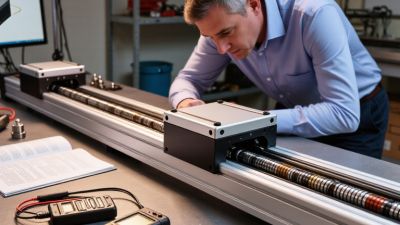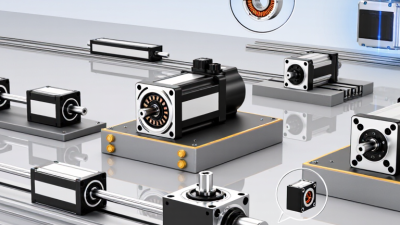
Buying a linear motor drive for global production is not a simple price comparison. It is a decision about motion accuracy, thermal stability, service access, and long-term machine uptime. MarketsandMarkets estimates that the global linear motor market will continue expanding through the decade, supported by semiconductor equipment, electronics assembly, robotics, and precision automation. That growth creates more choices, but also more technical confusion.
Eric Laithwaite, widely recognized for his work on linear motors, explained the concept simply: “A linear motor is a rotary motor unrolled.” The idea sounds easy. Integration is not.
A reliable linear motor drive must match the motor’s force curve, feedback system, amplifier rating, duty cycle, and machine structure. A glossy specification sheet cannot reveal every risk. For example, a drive rated for 20 A may still struggle when acceleration repeats every two seconds. Heat can build inside the cabinet. Cable drag can distort feedback. Small alignment errors can appear as visible marks on a moving stage.
Industry research from Interact Analysis also identifies motion control as a continuing automation investment area, especially where manufacturers seek higher productivity and flexible production. However, forecasts do not replace testing. They cannot confirm whether a selected drive will perform beside your spindle, vacuum table, or cleanroom process.
This guide presents ten practical buying tips for global buyers. It covers supplier credibility, regional support, encoder compatibility, safety functions, software, maintenance, and total ownership cost. Some recommendations may feel obvious. They are still often missed. The uncomfortable truth is simple: the cheapest drive can become the most expensive component after installation.
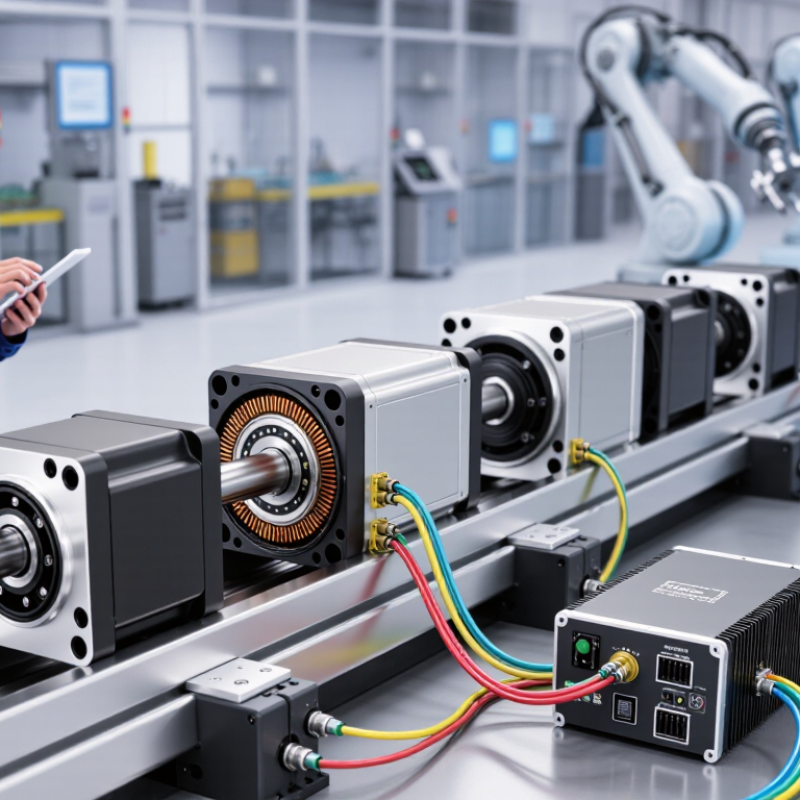
Before comparing linear motor drives, define the actual motion task. A drive for inspection equipment may need gentle, repeatable movement. A packaging machine may demand fast acceleration and frequent stops.
Record the payload, travel distance, stroke speed, acceleration, and positioning tolerance. Include the moving mass, not only the product weight. Estimate duty cycle over a full production hour. A motor that performs well for ten seconds may overheat during continuous operation. Small details matter.
Check the environment carefully. Dust, oil mist, vibration, and temperature changes can affect feedback devices and electrical cabinets. Ask whether the drive supports the required encoder type, communication protocol, and safety functions. Confirm the available supply voltage before requesting quotations. This mistake is common. It can delay an otherwise suitable project.
Use measured data whenever possible. A simple travel profile, with acceleration and settling time, helps suppliers size the motor and amplifier accurately. Leave practical margin for friction, cable drag, and future payload changes. Excessive margin can increase cost and reduce responsiveness. Insufficient margin creates alarms, heat, and unstable positioning. Review the calculations with the machine builder and maintenance team. Their experience may reveal an overlooked cleaning routine or a difficult service position. Requirements should be written in measurable terms, such as ±5 micrometers repeatability, rather than vague phrases like “high precision.”
| No. | Buying Tip | Application Requirement | Typical Planning Data | Key Verification Method | Why It Matters |
|---|---|---|---|---|---|
| 1 | Define the travel range | Specify the required linear stroke, usable travel, end clearances, and space for cable routing. | Common industrial travel: 50–2,000 mm; longer travel may require segmented construction and additional alignment control. | Measure the actual machine envelope and add stopping distance, maintenance access, and safety clearance. | An insufficient stroke causes mechanical interference or limits the process window. |
| 2 | Match speed and acceleration | Define maximum speed, acceleration, deceleration, cycle time, and motion profile. | Typical speed: 0.5–5 m/s; typical acceleration: 5–50 m/s², depending on payload and stiffness. | Calculate required force using F = m × a, then include friction, cable drag, and a design margin. | Speed alone does not determine performance; acceleration and settling time often control throughput. |
| 3 | Calculate continuous and peak force | Consider payload mass, external process force, gravity, friction, acceleration, and duty cycle. | For many precision axes: 50–1,000 N continuous force and 100–2,000 N peak force. | Review force-versus-speed curves at the intended bus voltage and operating temperature. | A drive can reach a short peak force but still overheat if the continuous RMS force is too high. |
| 4 | Set accuracy and repeatability targets | Separate positioning accuracy, bidirectional repeatability, resolution, and straightness requirements. | Typical precision-axis repeatability: ±1–5 µm; high-precision systems may require tighter calibration. | Request test conditions, measurement length, thermal state, load, and whether compensation is applied. | Encoder resolution does not automatically equal machine accuracy. |
| 5 | Evaluate load and moment capacity | Define static load, moving mass, center of gravity, overhung distance, and external moments. | Use manufacturer-rated load and moment limits; keep the working point below the limit with a safety factor of approximately 1.5–2.0. | Check bearing life, rail spacing, mounting stiffness, and allowable pitch, yaw, and roll moments. | Excessive overhung load can reduce accuracy, increase vibration, and shorten guide life. |
| 6 | Confirm duty cycle and thermal limits | Provide move distance, dwell time, acceleration profile, repetitions per hour, and ambient temperature. | Continuous operation is commonly assessed using RMS force; a practical design target is to maintain motor temperature within the specified limit. | Run a complete motion-cycle thermal test at the highest expected ambient temperature. | Thermal derating can reduce available force and cause position drift. |
| 7 | Choose the feedback system | Select linear or rotary feedback according to accuracy, contamination risk, servo bandwidth, and homing requirements. | Common linear scale resolutions: 0.1–10 µm; select based on required measurement resolution and control-loop performance. | Verify signal type, interpolation, maximum counting frequency, cable length, and controller compatibility. | Feedback quality directly affects repeatability, servo stability, and fault detection. |
| 8 | Check environmental suitability | Identify dust, liquid exposure, washdown, vacuum, humidity, vibration, and required cleanliness level. | Typical industrial ambient range: 5–40°C; protection levels vary by construction and application. | Review ingress protection, corrosion resistance, cable jacket material, and any required protective bellows. | Contamination can damage scales, guides, seals, and thermal-management components. |
| 9 | Verify electrical and control compatibility | Confirm supply voltage, current, regenerative energy, feedback interface, network protocol, and safety functions. | Common industrial DC bus classes include approximately 48 V and 325–680 VDC, depending on system architecture. | Check peak current, continuous current, braking resistor requirements, STO availability, and controller integration. | Electrical mismatch can cause reduced force, nuisance faults, or unsafe regenerative overvoltage. |
| 10 | Plan integration, service, and global logistics | Define installation tolerances, spare parts, documentation, packaging, compliance, lead time, and local technical support. | Prepare 2D/3D files, wiring diagrams, parameter backups, inspection records, and applicable conformity documents before purchase. | Request a complete acceptance checklist covering dimensions, performance, safety, shipping condition, and commissioning support. | Clear integration data reduces installation delays, customs issues, and commissioning risk. |
Note: The numerical ranges are general engineering planning values. Final selection should be based on tested force-speed curves, thermal data, mechanical-load calculations, environmental conditions, and the complete motion profile.

© 2024 Sierramotion. All Rights Reserved