Call Today: 916-259-1868

How to Choose a Direct Drive Linear Actuator in 2026?

Choosing a direct drive linear actuator in 2026 starts with the motion, not the product brochure. How far must the load travel? How quickly must it accelerate? A carriage carrying a camera, a precision stage, and a packaging shuttle demand different force, speed, and positioning profiles. Small details matter: cable routing, mounting stiffness, encoder resolution, and heat during repeated cycles.

Linear-motor pioneer Eric Laithwaite’s idea is often summarized as: “A linear motor is a rotary motor unrolled.” It captures the basic concept, but not the buying decision. A direct-drive system removes mechanical transmission components such as belts or screws. That can reduce backlash and maintenance, yet it does not automatically make a machine more accurate. Alignment, feedback, load variation, and thermal drift still matter. Sometimes the simpler-looking option is harder to integrate.

This guide explains how to compare continuous and peak force, stroke, speed, feedback, and environmental requirements. It also considers controller compatibility, cooling, installation space, and total cost over the actuator’s working life. Bring real operating data: payload mass, duty cycle, target repeatability, and available space. If those numbers are uncertain, say so. A careful estimate beats a confident guess, though it may need revision after testing.
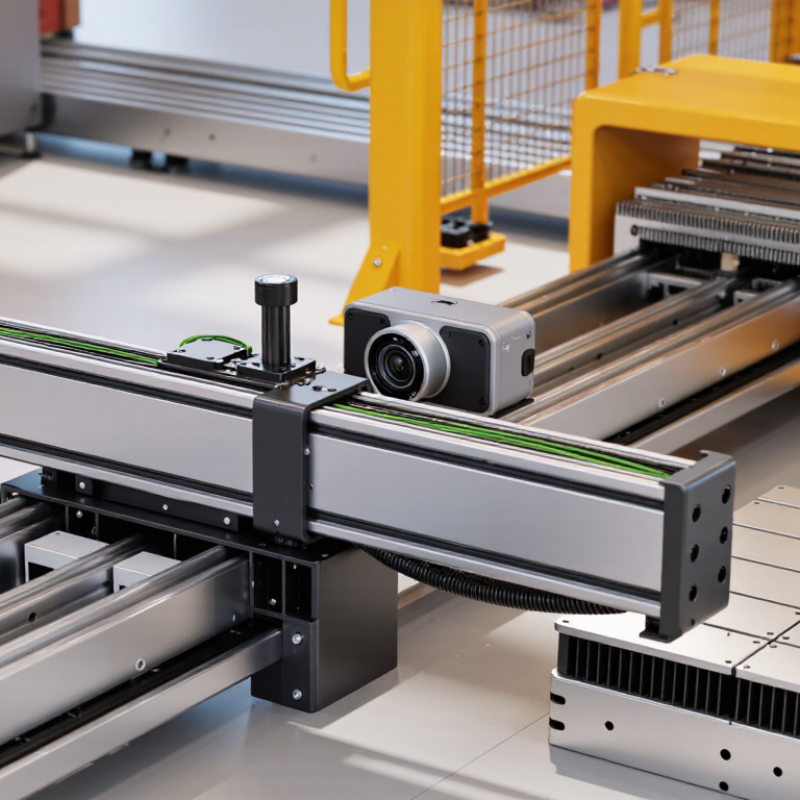
How to Choose a Direct Drive Linear Actuator in 2026?

Define the Motion Requirements and Operating Conditions

Define the motion before comparing actuator specifications. Record the required stroke, payload, travel time, acceleration, and positioning repeatability. Include the real motion profile, not just the maximum speed. A 300 mm move completed in 0.4 seconds may demand much more force during acceleration than during steady travel. Note whether the load moves horizontally or vertically, and whether it can create side loads on the guide.

Separate peak force from continuous force. Peak force governs short acceleration events; continuous force affects heating during repeated cycles. Estimate cycle frequency, dwell time, and hours of operation. Easy to miss. A machine that runs well during a short test may overheat after several hours. The first estimate may be imperfect, so validate it against the actual cycle.

Operating conditions matter just as much. Record ambient temperature, dust or moisture exposure, mounting stiffness, cable movement, and available installation space. Direct drive removes mechanical transmission elements, but it does not remove the need for suitable linear guidance. Check whether the guide can handle off-axis forces and whether the encoder can meet the required feedback resolution. Leave room for thermal management and service access. A compact layout can look ideal on a drawing, then become awkward when cables flex or components need adjustment.
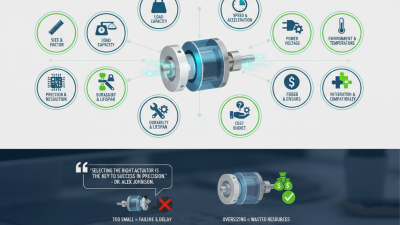

Compare Direct Drive Actuator Types and Performance Specifications

How to Choose a Direct Drive Linear Actuator in 2026?
Compare Direct Drive Actuator Types and Performance Specifications

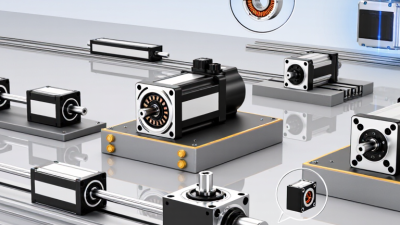
Direct-drive actuators move a load without a belt, screw, or gearbox between the motor and carriage. Compare iron-core, ironless, and tubular designs by their force, speed, stroke, and motion smoothness. Iron-core models can provide high force, but magnetic attraction may affect fine positioning. Ironless designs avoid that attraction and can run smoothly, though their force capacity may be lower for a similar size. Tubular designs package the motor and moving element neatly, but check their travel and mounting limits.

Read performance curves, not just headline ratings. Peak force may last only briefly; continuous force depends on cooling and duty cycle. Check encoder resolution, repeatability, maximum speed, and acceleration with your actual payload. Also inspect cable routing and mounting stiffness. A lightweight carriage can still vibrate if its frame flexes. Heat matters. In a real machine, the advertised speed may be less useful than stable positioning after repeated cycles.

Tips: Write down your required stroke, payload, cycle rate, and accuracy before comparing models. Ask for force-versus-speed data and thermal limits. Leave margin for friction and future load changes. One detail is easy to miss: test the actuator with your own fixture, since installation can change vibration and settling time.

How to Choose a Direct Drive Linear Actuator in 2026? — Compare Direct Drive Actuator Types and Performance Specifications

Actuator Type Drive Architecture Indicative Continuous Force Indicative Peak Force Typical Maximum Speed Typical Peak Acceleration Force Ripple and Cogging Typical Strengths Common Applications
Iron-Core Flat Linear Motor Coils wound around iron teeth move along a permanent-magnet track. About 100–1,000 N About 300–3,000 N About 1–5 m/s About 10–50 m/s² Generally higher than ironless designs because of magnetic attraction and cogging; compensation may be available. High force density and strong continuous-force capability. Iron provides an effective magnetic path. Heavy-duty automation, presses, machine tools, and applications with high thrust requirements.
Ironless Flat Linear Motor Coil assembly moves between magnet arrays without an iron core in the moving coil. About 20–500 N About 60–1,500 N About 1–10 m/s About 20–100 m/s² Very low cogging and generally smooth force across the travel range. Low moving mass, smooth motion, and fast response. Usually needs careful thermal management at sustained high loads. Precision inspection, semiconductor equipment, pick-and-place systems, and high-speed positioning.
Ironless Tubular Linear Motor A cylindrical coil assembly moves along a rod-shaped permanent-magnet track. About 10–400 N About 30–1,200 N About 1–5 m/s About 10–60 m/s² Typically low cogging; force smoothness depends on the motor’s magnetic and coil design. Compact, enclosed geometry and direct linear force without a screw or belt transmission. Packaging machinery, laboratory automation, compact transfer axes, and reciprocating motion.
Integrated Linear-Motor Stage A linear motor is packaged with a guide system, position feedback, and often a base or carriage. About 20–1,000 N, depending on stage size and motor design About 60–3,000 N, depending on motor and drive limits About 1–5 m/s for many standard stages About 10–50 m/s² for many standard stages Depends on whether the integrated motor is iron-core or ironless. Pre-integrated guidance and feedback simplify installation. Stage stiffness, payload, and travel must be checked as a complete system. Multi-axis automation, precision assembly, inspection systems, and equipment requiring a ready-to-mount motion axis.

Selection note: Figures are broad, indicative ranges for comparing actuator designs, not guaranteed specifications. Actual force and speed depend on motor dimensions, cooling, drive current, duty cycle, stroke, payload, and mechanical guidance. Confirm continuous force at the required duty cycle, peak force and duration, thermal limits, encoder resolution, repeatability, and load support with the complete actuator specification.

Check Precision, Controls, and Mechanical Integration Needs

A direct-drive linear actuator should match the motion your process actually needs. Start with the payload, travel distance, speed, and duty cycle. Then examine repeatability and positioning accuracy separately; they describe different performance limits. A camera stage may need smooth, tiny corrections, while a packaging fixture may prioritize quick moves and predictable settling. Small errors matter. Ask how measurements were taken, and under what load and temperature. Catalog figures alone can hide important conditions.

Controls shape real-world precision. Check encoder resolution, feedback frequency, servo tuning options, and how the actuator communicates with your motion controller. If the axis must synchronize with other equipment, confirm timing and command compatibility before purchase. A responsive drive can still perform poorly when gains are badly tuned or cables introduce electrical noise. Test with your actual payload, not just an empty carriage. That extra step may reveal vibration or settling delays that a specification sheet cannot.

Mechanical integration deserves equal attention. Compare mounting-hole patterns, carriage stiffness, cable routing, thermal limits, and available space around the moving assembly. Direct drive removes some transmission components, but it does not remove alignment work. A slightly flexible bracket can undermine excellent encoder feedback. I have seen teams focus heavily on resolution, then discover that their frame twists during acceleration. Leave room for service access, too; tight layouts look efficient until a cable needs replacement.

Evaluate Environmental Limits, Maintenance, and Safety Requirements

When selecting a direct-drive linear actuator, start with the actual environment, not the catalog headline. Record ambient temperature, splash direction, dust, cleaning chemicals, and daily duty cycle. A washdown cell and a dry packaging line are different worlds. IEC 60529 defines enclosure ingress-protection tests, but an IP rating does not certify chemical resistance or corrosion protection. Ask for test conditions, cable-entry details, and the allowable temperature range.

Heat and contamination quietly shorten service life. Check whether the actuator needs lubrication, how often seals require inspection, and whether technicians can reach fasteners without removing guards. Small details matter. The U.S. Department of Energy’s 2014 Manufacturing Energy and Carbon Footprint estimated motor-driven systems use about 68% of U.S. manufacturing electricity. That is not an actuator-efficiency claim; it is a reminder to measure duty cycle and heat. Log motor temperature and cycle counts during a representative shift. Test under load.

For safety, review stopping distance, pinch points, payload-drop risk, and access during fault recovery. A built-in limit switch is not a complete safeguarding strategy. Validate the risk assessment against ISO 12100, then confirm safety functions with the machine integrator. Deloitte’s 2017 predictive-maintenance analysis estimates potential maintenance-cost reductions of 5–10% and uptime gains of 10–20%. These are estimates, not guarantees. Keep inspection intervals realistic. A missed schedule is worse than an ambitious one.

Compare Total Ownership Costs and Supplier Support in 2026

A direct drive linear actuator can look economical on a quotation sheet, yet the purchase price tells only part of the story. Compare installation, motion-control integration, commissioning, energy use, maintenance, and expected downtime over the machine’s service life. Ask for a written estimate of required cables, feedback devices, and mounting hardware. Small omissions add up.

Supplier support affects those costs directly. Check whether engineers can review your load profile, travel distance, duty cycle, and operating environment before selection. Ask how quickly they answer technical questions, whether setup documentation is clear, and which spare parts are stocked locally. A fast reply matters. So does practical troubleshooting after installation, when a production line is waiting.

Request lifecycle assumptions in writing, including service intervals and replacement-part availability. If possible, test the actuator under a representative load; smooth motion on a bench may not reflect heat, vibration, or contamination at the actual site. Compare support commitments alongside price, but avoid treating a service promise as guaranteed uptime. I would leave room for uncertainty: real maintenance costs depend on the application, and early estimates can miss integration work. A supplier willing to discuss those limits may be more useful than one offering the lowest initial figure.