Call Today: 916-259-1868

How to Choose the Best Coil Actuator Supplier in China?

Choosing a coil actuator supplier in China can shape product reliability, lead time, and long-term costs. A polished catalog is not enough. You need evidence that the supplier understands your operating conditions, not just your drawing. What voltage, stroke, force, duty cycle, and temperature range will the actuator face? Share these details early, along with mounting limits and expected service life.

Ask how the supplier verifies performance. Useful evidence may include force-versus-stroke results, coil resistance checks, insulation test records, and sample inspection reports. Request a prototype before approving a larger order. Then compare the measured response with your requirements. Small differences matter. A coil actuator that works on a bench may behave differently inside a hot, vibrating enclosure. That point is easy to miss.

Review materials, production controls, and communication as carefully as price. Ask who handles winding, assembly, testing, and corrective actions. Clarify sample fees, tooling ownership, minimum order quantities, packaging, and delivery estimates in writing. If the answers are vague, pause. A supplier may be capable, but the proof is not yet clear. Factory visits or live video reviews can help you assess equipment and workflow, though they cannot replace independent testing. I would also leave room for uncertainty: specifications can change, and even a good supplier may need adjustment rounds. The aim is not to find the lowest quote. It is to find a partner who can explain trade-offs, document results, and respond consistently when the first sample is imperfect.
How to Choose the Best Coil Actuator Supplier in China?

Define Your Coil Actuator Requirements and Application Conditions

Before comparing coil actuator suppliers, define the job the actuator must perform. State the required force, stroke length, response time, and operating voltage. Specify AC or DC, plus the expected duty cycle. A coil used for brief pulses may overheat during continuous operation. Small details matter. Record available space, mounting points, connector type, and any limits on noise or power consumption. Include ambient temperature, dust, moisture, vibration, and nearby heat sources. If these conditions are uncertain, say so rather than presenting guesses as fixed requirements.

Describe the actual operating sequence, not only the ideal one. For example, note how often the actuator moves and whether it must hold a load between cycles. Ask suppliers to confirm force across the intended stroke, not just at one convenient measurement point. Request test conditions and clarify whether samples can be evaluated in your assembly. A clean bench test may not reflect a cramped enclosure or a warm machine. Specifications can still miss the real use case; that is worth admitting early. I would rather revise a requirement than discover later that a technically correct actuator performs poorly in the application.
Assess Supplier Manufacturing Capabilities and Product Range

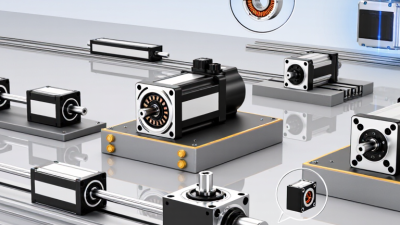
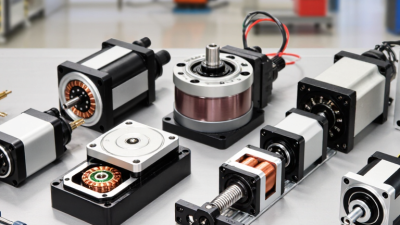
When assessing a coil actuator supplier in China, look beyond catalog photos. Ask how coils are wound, insulated, and checked during production. A capable factory should explain its process in clear terms, including wire specifications, winding controls, and inspection points. Ask for sample test records and confirm that the tested model matches your application. A polished brochure is not proof.

Review the product range against your actual operating conditions. Compare actuator dimensions, voltage options, force, stroke, duty cycle, and connector choices. Check whether the supplier offers related coil assemblies or only standard models. Ask what can be customized, and what changes require new tooling or longer lead times. Details matter. A wide catalog can look reassuring, but it may hide limited engineering support. Request drawings, tolerances, and a sample for fit checks before discussing larger orders.

Manufacturing capacity also deserves careful questions. Ask how the supplier handles repeat orders, material traceability, and changes to production specifications. If possible, review the facility or request a live process walkthrough. Short answers are not always a warning, but vague answers about testing should prompt follow-up. A sample cannot represent every production run, so agree on acceptance criteria and documentation before approval. No checklist catches every surprise.

Verify Quality Systems, Certifications, and Product Testing

A coil actuator supplier’s certificate is a starting point, not proof of consistent performance. Ask for the current quality certificate and check its issuing body, expiry date, production-site address, and scope. The scope should cover the processes relevant to your actuator, not just general trading or assembly. Request a sample inspection plan and a recent, anonymized batch record. Paperwork can look tidy. The details matter.

Product testing should match your application. For a sample unit, review winding resistance, insulation results, operating force, stroke, and response time. If the actuator will cycle often, ask how endurance tests are run and what counts as failure. Check that test equipment has current calibration records, and ask how failed units are investigated. A good supplier can explain the method, not only send a pass label. One gap may remain: a short sample test cannot predict every field condition.

Compare the supplier’s records with your own acceptance limits before placing a production order. Confirm how components and finished units are traced by lot, and how design or process changes are approved and recorded. These checks take time, but they make quality claims easier to verify. Request a small pilot batch and inspect it independently when practical. The results may reveal issues neither side expected.

How to Choose the Best Coil Actuator Supplier in China? - Verify Quality Systems, Certifications, and Product Testing

Evaluation Area What to Verify Evidence to Request Practical Assessment
Quality management system Whether the production site has a documented quality system and controls for inspection, nonconforming product, corrective action, and change management. Current ISO 9001 certificate, including the certified legal entity, site, scope, and validity; sample procedures or audit records where available. Confirm that the certificate covers the actual manufacturing location and relevant activities. A certificate alone does not prove product performance.
Industry-specific certification Whether additional sector requirements apply to the intended end use, such as automotive quality-system requirements. For automotive applications, verify any claimed IATF 16949 certification, its scope, site, and current validity. Request customer-specific quality requirements if applicable. Treat sector certification as application-dependent; it is not a universal requirement for every coil actuator purchase.
Certificate authenticity and scope Whether certificates are current, issued to the correct organization, and relevant to the factory and product-related processes being evaluated. Certificate number, issuer details, accreditation information where applicable, scope, site address, and expiry or surveillance status. Confirm details with the issuing certification body or its official verification service. Do not rely only on a certificate image or logo.
Product and material traceability Whether finished actuators can be traced to production lots and relevant components, such as coil wire, insulation materials, and magnetic parts. Lot or serial-number records, material specifications, incoming inspection records, and a sample certificate of conformity. Check that traceability records connect supplied units to documented inspection and production information.
Electrical testing Whether electrical characteristics are tested against the agreed design and operating conditions. Test records for coil resistance, insulation resistance, and dielectric withstand where required by the product specification and applicable safety requirements. Review test conditions, acceptance limits, equipment identification, and calibration status. Limits should match the agreed product specification.
Mechanical and functional testing Whether the actuator delivers the required motion and output under defined load, voltage, and environmental conditions. Force or holding-force data, stroke, response or release time, and functional test results for representative units. Compare results with the datasheet and application requirements; confirm test setup and measurement method are documented.
Thermal and endurance testing Whether temperature rise and operating life have been evaluated for the intended duty cycle and conditions. Temperature-rise results and endurance-cycle reports, including test voltage, load, duty cycle, ambient conditions, and failure criteria. Check that test conditions represent the intended use. Do not compare cycle-life claims without consistent methods and conditions.
Test equipment and laboratory competence Whether measuring equipment is suitable, maintained, and calibrated; whether external test reports come from a competent laboratory. Equipment list, calibration records, and laboratory reports. Where relevant, check whether a laboratory is accredited to ISO/IEC 17025 for the specific test and method. ISO/IEC 17025 accreditation applies to laboratory competence within a defined scope; it is not a product certification.
Regulatory documentation and changes Whether the product documentation supports the destination market and whether design or process changes are communicated before implementation. Applicable declarations, technical documentation, material declarations, and a documented change-notification process, as required for the product and market. Check applicable legal requirements for the specific actuator and market. A CE marking or declaration is relevant only when the product falls under applicable EU legislation.

Note: Set product-specific acceptance limits and test conditions in the approved specification before comparing suppliers.

Compare Pricing, Lead Times, and Technical Support

When choosing a coil actuator supplier in China, compare more than the unit price. Ask for a quotation that separates tooling, samples, packaging, and freight. Then calculate the landed cost for your expected order volume. A low price can hide costly rework or unclear test requirements. Small details matter.

Lead times deserve the same scrutiny. Request separate dates for samples, production, and shipment, plus written assumptions about material availability. McKinsey’s 2020 report on supply-chain resilience estimates that disruptions lasting a month or longer occur about once every 3.7 years. That makes contingency planning practical, not excessive. Ask how the supplier handles a delayed winding material or a failed inspection. A spreadsheet alone is not enough.

Technical support is easier to judge through specific questions. Can engineers provide coil resistance, duty-cycle limits, temperature-rise data, and dimensional tolerances? Ask for a sample test report and a named contact for design changes. During evaluation, send the same drawing and operating conditions to each supplier; compare response time and clarity, not just confidence. A fast reply helps. Still, polished answers are not proof of production capability. I would verify critical figures on a physical sample, even when it adds time. That extra check can feel inconvenient, but skipping it is sometimes the more expensive choice.

Validate Shortlisted Suppliers Through Samples and Factory Audits

Ask shortlisted suppliers for samples made with the proposed wire, bobbin, core, and insulation. Test at least three units, not just a hand-picked sample. Measure coil resistance, pull-in voltage, force across the stroke, and temperature rise during the stated duty cycle. Record the ambient temperature and test setup; small differences can distort comparisons. Check dimensions against your drawing, too. A sample that works once may still vary between production lots.

Use documents as evidence, not a substitute for testing. ISO’s 2022 Survey recorded 1,265,216 valid ISO 9001 certificates worldwide. Certification indicates a quality-management system, but it does not prove that a particular actuator meets your requirements. Ask for calibration records, inspection plans, and traceability from incoming wire to finished units. Then compare those records with actual shop-floor practice.

Walk the winding, assembly, and inspection areas during a factory audit. Watch an operator set winding tension and inspect insulation; ask how rejects are isolated and corrective actions verified. Check whether test instruments have current calibration labels and whether production records match the sample lot. A tidy audit file can hide weak habits. One limitation: a short visit cannot reveal every shift’s consistency, so request a pilot run and inspect units from different production batches before approving volume orders.