Choosing among China’s top frameless torque motor suppliers requires more than comparing catalog prices. A reliable evaluation considers engineering experience, production consistency, testing procedures, and after-sales communication. These factors matter when a motor must fit inside a robotic joint, rotary table, camera gimbal, or medical positioning system.
A frameless torque motor usually includes a separate rotor and stator. This design gives machine builders more freedom, but it also demands accurate mechanical integration. Small alignment errors can create vibration, heat, or uneven torque. Experienced suppliers should explain air-gap control, winding options, encoder compatibility, cooling methods, and continuous torque ratings in practical terms.
Look for manufacturers with documented testing records. Useful evidence may include torque-speed curves, insulation test results, thermal data, and sample inspection reports. Factory audits, engineering calls, and prototype trials can reveal more than polished product pages. Ask how suppliers handle custom shafts, cable routing, low-volume orders, and design changes.
“Top” is not a universal label. A supplier serving high-volume automation may not suit a research laboratory. Some companies appear strong online but provide limited technical support after payment. That gap deserves attention.
This guide compares China-based suppliers through measurable criteria, including product range, customization capability, quality control, communication speed, and application experience. The assessment remains practical rather than absolute. Supplier information changes, and published specifications may require independent verification. A careful buyer should test samples under real load, temperature, and duty-cycle conditions before approving final production.
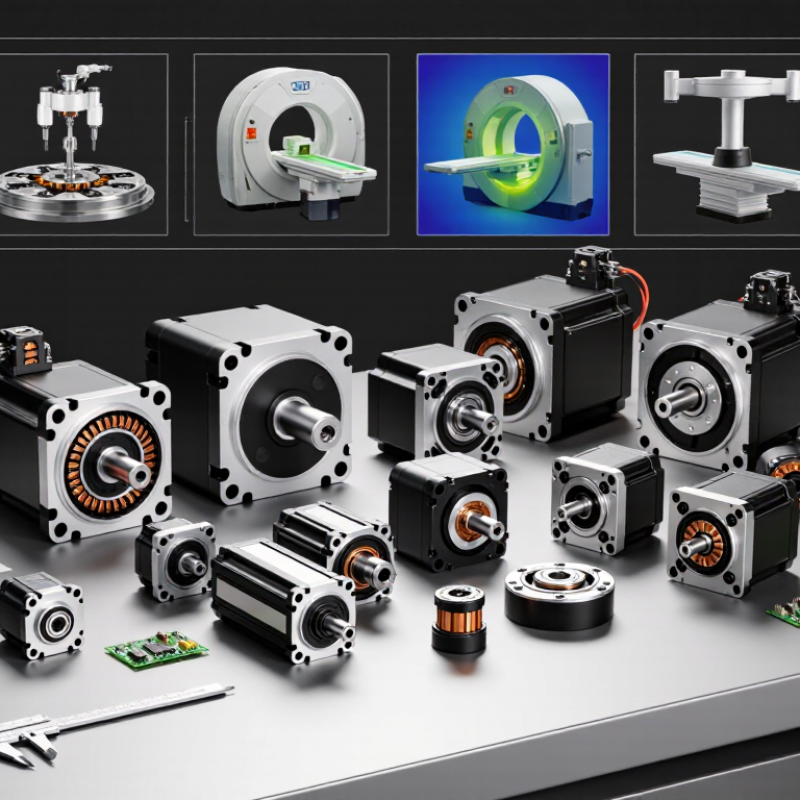
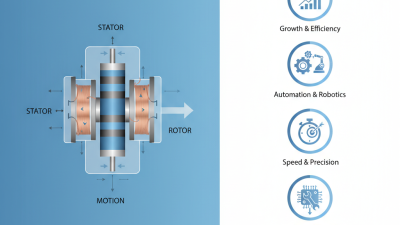
A frameless torque motor is a direct-drive motor without a housing, shaft, or built-in bearings. Its main parts are separate: a rotor with permanent magnets and a stator containing copper windings. Engineers install these parts inside the machine’s own structure.
The motor produces torque through electromagnetic force. The drive sends controlled current through the stator windings. This current creates a rotating magnetic field. The rotor follows that field and turns the connected mechanism directly. No gearbox is required. This reduces backlash, mechanical noise, and maintenance points. It also supports accurate motion at low speed.
During practical integration, alignment matters more than many buyers expect. A small eccentricity can create vibration, uneven heating, or reduced torque. The machine also needs a suitable encoder, drive, cooling path, and rigid mounting surface. Reliable suppliers should provide torque-speed curves, winding resistance, thermal limits, and installation tolerances. These details reveal more than a simple catalog rating.
Frameless motors can deliver high torque in compact spaces, but they are not automatically easy to use. Poor cooling can damage insulation. Incorrect feedback settings can produce unstable movement. I have seen designs that looked efficient on paper but needed stronger mechanical support after testing. That gap between theory and assembly deserves careful review.

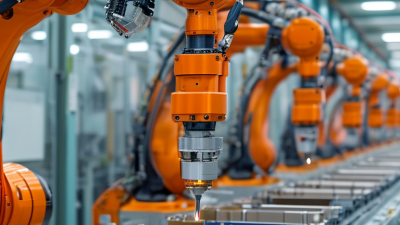
Frameless torque motors support precise motion in compact industrial equipment. Unlike complete servo motors, they integrate directly into a machine’s bearings, housing, and feedback system. This structure reduces mechanical connections and can improve stiffness. In robotic joints, the motor sits around the joint axis, leaving space for cables or pneumatic lines. Smooth torque helps robots handle assembly, polishing, and delicate insertion tasks.
Their hollow center is useful in semiconductor handlers and inspection platforms. Optical paths, vacuum lines, and rotating wiring can pass through the motor’s open bore. Direct drive also removes gear backlash, which benefits wafer alignment and camera positioning. In medical imaging equipment, engineers may use these motors for quiet, controlled rotation. Low vibration matters when sensors capture fine details.
Chinese suppliers serve many of these applications, but specifications need careful verification. Continuous torque, peak torque, winding temperature, encoder compatibility, and cooling methods should match the real duty cycle. A motor that performs well in a brief test may overheat during repeated indexing. That mistake is surprisingly common. I would also request rotor balancing data and lifecycle test records, not only a catalog curve. Installation can be less simple than expected, especially when tolerances, preload, and heat paths are poorly defined. Engineers should test the complete assembly, because motor performance alone rarely reveals structural resonance or cable-related friction.
Frameless torque motors are integrated directly into a machine’s rotary axis, eliminating conventional couplings and gearboxes. The chart shows representative continuous torque ranges commonly considered during industrial system design.
Engineering reference ranges: actual torque requirements depend on payload, acceleration, duty cycle, friction, thermal limits, and mechanical configuration. Values are not market-share data.
Selecting a reliable frameless torque motor supplier requires more than comparing catalog prices. Review continuous torque, peak torque, torque constant, winding options, and thermal resistance. Ask for measured curves, not only estimated values. A serious supplier should explain air-gap tolerance, rotor inertia, encoder compatibility, and cooling methods clearly. These details affect positioning accuracy and operating life.
Request sample motors for testing under your actual load profile. Check temperature rise after repeated acceleration cycles. Inspect cogging torque, noise, connector quality, and rotor balance. Factory audits can reveal assembly cleanliness, testing equipment, and process control. Confirm whether each motor has a traceable inspection report. A polished website proves little. Real data matters more.
Ask for a dimensional drawing before discussing final pricing. Verify tolerances with your mechanical team. Require a written response time for technical issues and replacement procedures. Check production capacity through recent delivery records, but do not accept vague promises. A lower quote may hide tooling costs or limited testing. That mistake is easy to make. Also, supplier documentation can contain small inconsistencies, so review every value carefully. A dependable partner welcomes technical questions and admits limits instead of claiming that every custom request is effortless.
China’s leading frameless torque motor manufacturers differ in engineering depth, customization, and production control. Some focus on standard stator-rotor kits for robotics and precision stages. Others develop winding layouts, thermal paths, and feedback solutions for demanding machines. A reliable supplier should provide torque curves, cogging data, winding resistance, and temperature limits. These details reveal more than catalog promises.
Factory capability matters during comparison. Manufacturers with in-house winding, balancing, inspection, and end-of-line testing usually offer stronger process consistency. Ask how they measure radial runout and air-gap uniformity. Request sample reports from a recent production batch. Communication is also practical evidence. Clear answers about tolerances, lead times, and failure handling often indicate mature technical support. Still, no supplier is perfect. Published performance may change after assembly, especially when the customer’s housing is thin or poorly aligned.
Tips: Compare identical conditions, not isolated peak torque figures. Check continuous torque at the actual duty cycle. Review cooling assumptions, encoder compatibility, and mounting accuracy. A small prototype can expose vibration, heat buildup, or unexpected noise before volume production. I would also examine packaging and documentation. These seem minor, yet missing drawings can delay integration. Independent validation remains worthwhile, even when factory data looks complete.
China Top Frameless Torque Motor Suppliers? How to Select the Right Supplier for Your Project Needs
Choosing a frameless torque motor supplier requires more than comparing catalog prices. The International Federation of Robotics reported 541,302 industrial robot installations worldwide in 2023. This demand increases pressure on motor accuracy, thermal stability, and delivery reliability. Ask suppliers for measured torque constant, torque ripple, winding resistance, and continuous torque data. A polished brochure is not enough.
Check whether the supplier can match your mechanical envelope. Provide shaft diameter, axial length, peak torque, speed, duty cycle, and cooling conditions. Request test records from the actual production line, not only laboratory samples. ISO 9283 testing can help verify positioning performance in robotic applications. Also examine bearing options, encoder compatibility, insulation class, and protection ratings. Small details matter.
Experience exposes uncomfortable gaps. Some motors meet rated torque only with aggressive cooling. Others become noisy after repeated thermal cycles. Require a sample test at your real load and temperature. The IEA estimates motor-driven systems consume roughly half of global electricity, so efficiency deserves attention beyond purchase cost. Review failure data, replacement lead times, inspection procedures, and technical response times. A supplier may appear highly capable, yet weak documentation can delay integration. Ask difficult questions early.
| Evaluation Dimension | Weight | Recommended Screening Benchmark | Why It Matters for Frameless Torque Motors | Evidence to Request from the Supplier | Project Fit Indicator |
|---|---|---|---|---|---|
| Continuous Torque Capability | 20% | Select a motor whose continuous torque rating is at least 20–30% above the calculated RMS operating torque. | Provides thermal margin during continuous motion, low-speed holding, and repetitive positioning cycles. | Torque-speed curve, winding resistance, thermal test conditions, cooling method, and RMS duty-cycle calculation. | High when the motor meets the margin without forced cooling. |
| Peak Torque and Overload Time | 15% | Peak torque should cover the maximum acceleration or disturbance torque, commonly for 1–10 seconds depending on the design. | Determines whether the axis can accelerate quickly and reject short-duration external disturbances without demagnetization or overheating. | Peak torque rating, permissible overload duration, current limit, thermal recovery requirement, and test data. | High when the peak requirement is met with at least 10% reserve. |
| Torque Constant and Current Demand | 10% | Compare the torque constant in N·m/A and verify compatibility with the selected servo drive's continuous and peak current limits. | A higher torque constant can reduce copper losses, drive current, connector size, and heat generation for the same torque output. | Kt value, phase-current definition, RMS or peak convention, back-EMF constant, and motor-drive matching report. | High when the required torque is achieved within the drive's current envelope. |
| Speed and Back-EMF Compatibility | 10% | Verify the required operating speed and ensure the back-EMF remains compatible with the available DC-bus voltage. | Frameless torque motors may reach high torque at low speed but become voltage-limited at higher speed. | Speed-torque curve, back-EMF constant, maximum electrical speed, DC-bus voltage range, and field-weakening requirements. | High when the full speed range is available without excessive field weakening. |
| Rotor Inertia and Dynamic Response | 10% | Prefer low rotor inertia when the application requires fast settling, frequent reversals, or high acceleration. | Rotor inertia directly affects acceleration time, control-loop tuning, and the ability to reject motion disturbances. | Rotor inertia in kg·m², rotor mass, allowable acceleration, load-to-motor inertia ratio, and dynamic test results. | High when the combined inertia ratio supports the required settling time. |
| Mechanical Integration | 10% | Confirm stator and rotor inner/outer diameters, active length, air gap, mounting features, shaft design, and allowable axial/radial loads. | Frameless motors are integrated directly into the mechanism, so dimensional errors can affect air-gap uniformity and reliability. | 2D drawings, 3D CAD files, tolerance stack-up, air-gap specification, runout data, and sample inspection report. | High when the motor fits without redesigning the housing or bearing system. |
| Thermal Management | 10% | Evaluate natural convection, housing conduction, liquid cooling, winding temperature rise, and insulation temperature class. | Continuous torque is strongly dependent on heat dissipation and the thermal resistance between the winding and the machine housing. | Thermal resistance, temperature-rise curve, winding temperature limit, insulation class, cooling assumptions, and thermal simulation. | High when the thermal test conditions match the final machine design. |
| Position Feedback Compatibility | 8% | Confirm compatibility with the selected resolver, Hall sensor, incremental encoder, absolute encoder, or third-party feedback device. | Frameless motors normally require an external position sensor for commutation and closed-loop positioning. | Sensor mounting drawing, electrical interface, pole-pair information, commutation sequence, alignment procedure, and repeatability data. | High when sensor integration and commutation alignment are clearly documented. |
| Bearing and Structural Responsibility | 5% | Confirm that the customer-provided bearing system can withstand the specified radial, axial, moment, and overspeed loads. | A frameless motor does not normally include its own bearings, shaft support, or complete mechanical enclosure. | Load calculations, rotor support requirements, maximum air-gap error, overspeed limit, and balancing grade. | Medium until the complete mechanical assembly has been validated. |
| Quality and Compliance Documentation | 7% | Require traceable inspection records, documented change control, applicable RoHS/REACH declarations, and electrical safety information. | Consistent material, winding, magnet, and dimensional control reduces batch-to-batch performance variation. | Incoming inspection plan, final test report, material declarations, process control plan, nonconformance procedure, and sample traceability. | High when documents are complete, current, and linked to serial or batch records. |
| Prototype and Production Support | 5% | Prefer suppliers that can support prototype quantities, engineering changes, production ramp-up, and replacement-unit consistency. | Frameless motors often require mechanical, thermal, sensor, and control validation before mass production. | Prototype lead time, engineering response time, sample approval process, production capacity statement, and after-sales procedure. | Medium until prototype performance and communication quality are demonstrated. |
Sierramotion engineers help customers design solutions to complex motion problems. Whether a simple coil, or a precision motion assembly working in vacuum, Sierramotion has the experience to create a solution that works the first time.