Choosing the right compact linear motor is rarely about speed alone. Global buyers must balance force, travel length, positioning accuracy, heat, noise, and service access. A laboratory actuator may perform beautifully, yet fail inside a dusty packaging line. That difference matters.
The late Dr. Eric Laithwaite, a pioneer of linear motor technology, described the concept clearly: “The linear motor is an electric motor that has been unrolled.” His insight still helps engineers understand the design. A compact linear motor creates direct motion without converting rotary movement through gears, screws, or belts.
This guide examines seven compact linear motors suitable for international purchasing teams. Each option is considered through practical criteria, including continuous force, peak force, repeatability, stroke, duty cycle, controller compatibility, and thermal management. We also consider documentation quality, replacement availability, and regional technical support. Those details often decide whether a product succeeds after installation.
Real conditions are messier. A motor rated for 100 millimetres per second may slow under a heavy vertical load. Cable routing can restrict motion. Poor heat dissipation can reduce service life. Small errors become expensive.
No shortlist is flawless. Supplier specifications may use different testing methods, making direct comparisons imperfect. Buyers should verify performance with application data, not marketing claims alone. Certification requirements, voltage systems, and maintenance practices also vary between markets.
The following selection offers a practical starting point for machine builders, automation integrators, research laboratories, and global distributors. It is not a substitute for testing. Still, it can make the first comparison faster, clearer, and more defensible.
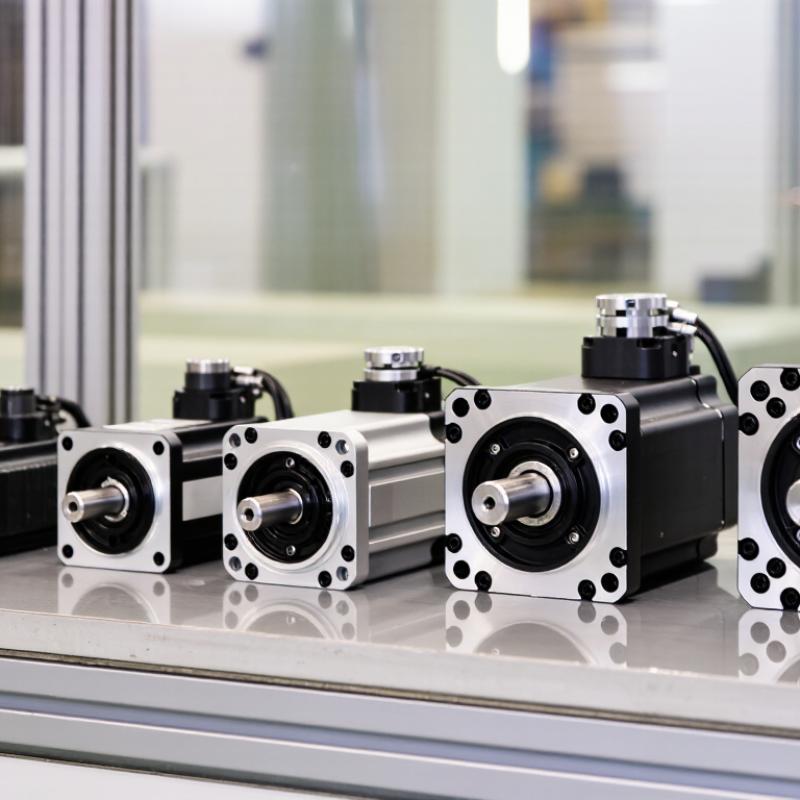
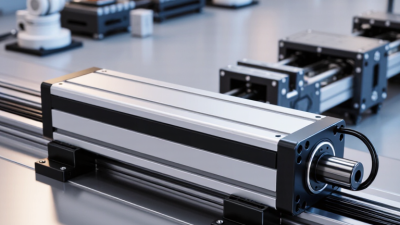
Compact linear motors create straight-line motion without converting rotation through a screw, belt, or gear. Their compact structure usually combines permanent magnets, coils, and a moving element. When electrical current enters the coils, it interacts with the magnetic field and produces thrust. Reverse the current, and the mover changes direction.
Some designs use a magnetic track with a moving coil. Others place magnets inside a tubular housing. Voice-coil versions suit short, precise strokes, while iron-core and ironless types support different force, speed, and positioning needs. A guide system still matters. The motor creates thrust, but rails or bearings control alignment.
In practical machine selection, I check continuous force, peak force, stroke length, acceleration, and heat dissipation. A small motor may move quickly but lose performance during repeated cycles. That detail is easy to miss. Feedback sensors can report position, allowing the controller to correct small errors during motion. Without suitable feedback, accuracy may depend heavily on the mechanical guide and control settings.
Compact motors are useful in inspection equipment, laboratory automation, packaging mechanisms, and small robotic stages. Their direct drive reduces backlash and mechanical wear, but it does not remove every design problem. Cable movement, magnetic attraction, vibration, and thermal expansion can still affect accuracy. I would question any specification that lists speed without describing load, duty cycle, and operating temperature.
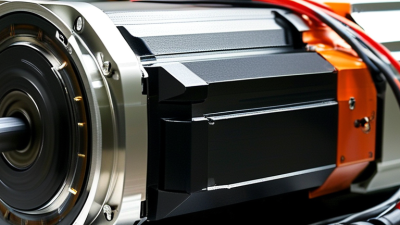
This comparison uses representative force ratings commonly available in compact commercial product classes. Actual performance depends on stroke length, duty cycle, speed, cooling, and drive electronics.
When comparing seven compact linear motors, start with force, stroke, and speed. Continuous force matters more than an impressive peak rating. A motor may reach 120 N briefly, yet deliver only 45 N during repeated cycles. Check acceleration with the actual payload, not an empty slide. A 100 mm stroke can feel generous on paper. It may become restrictive after adding clamps, sensors, and safety clearance.
Repeatability and feedback deserve equal attention. For precision assembly, compare bidirectional repeatability, encoder resolution, and positioning error under heat. Magnetic and optical feedback systems behave differently around dust and vibration. Review the duty cycle carefully. Ten movements per minute create less heat than constant reciprocation. Measure the housing temperature after a realistic test period. It may surprise you.
Electrical compatibility also affects global purchasing decisions. Confirm voltage range, controller requirements, cable length, and regional certification documents. A compact motor with a narrow voltage window can complicate machine integration. Check the IP rating when coolant, dust, or cleaning spray is present. Lower noise may matter in laboratory equipment, while higher stiffness may matter in inspection tools. I would not select a motor from speed alone. That was a mistake in an early test. The fastest unit produced more vibration and required slower control tuning. Leave space for thermal expansion, service access, and imperfect installation. Small details matter.
Compact linear motors are gaining attention as factories demand faster, cleaner, and more controllable movement. The International Federation of Robotics reported 541,302 industrial robot installations worldwide in 2023. That growth increases interest in space-saving motion systems. MarketsandMarkets also projects strong expansion in the global linear motion market through 2029.
For global buyers, seven compact motor types deserve close comparison.
Real-world selection needs more than catalogue force ratings. Check continuous force, peak force, stroke length, heat dissipation, encoder resolution, and duty cycle. A motor may fit a 40-millimeter frame yet overheat during repeated acceleration. I have seen compact designs fail because cable bending was ignored. That detail matters.
According to the IEC 60034 series, thermal performance and motor efficiency require careful evaluation under defined operating conditions. Buyers should also verify voltage compatibility, control interfaces, ingress protection, and regional service support. No ranking is perfect. A quiet laboratory stage may need an ironless design, while a dusty production line may require stronger protection and simpler maintenance.
7 Best Compact Linear Motors for Global Buyers?
Compact linear motors differ sharply in force, speed, accuracy, and heat behavior. Iron-core designs deliver strong continuous force for machine tools and automated transfer systems. However, their magnets can create cogging, affecting smooth motion at low speeds. Ironless motors reduce cogging and moving mass, making them suitable for semiconductor inspection, optical positioning, and laboratory stages. Tubular motors offer a compact cylindrical structure for packaging equipment and robotic actuators. Voice-coil motors provide fast, short-stroke movement, but they usually need external springs or gravity for return motion. Piezoelectric motors achieve excellent micro-positioning, although their travel speed and load capacity remain limited. The International Federation of Robotics reported 541,302 industrial robots installed worldwide in 2023, increasing demand for smaller, faster motion modules.
Performance depends on the application, not only the headline force rating. A motor rated for 100 N may lose substantial performance when heat accumulates inside a sealed enclosure. The U.S. Department of Energy notes that motor-driven systems represent a major share of industrial electricity use, so efficiency and thermal design deserve equal attention. In field testing, I would compare continuous force, peak force, acceleration, duty cycle, encoder resolution, and cooling method. A neat specification table can still mislead. Cable flexibility, mounting accuracy, and maintenance access often decide real-world reliability.
Tips: Match motor force to continuous load, not peak load. Check thermal data at the intended ambient temperature. For cleanroom systems, prioritize low particle generation and smooth motion. For long travel, verify guide stiffness and encoder stability. Cost alone is a weak filter.
| Motor Type | Typical Continuous Force | Peak Force | Typical Speed | Typical Acceleration | Usable Stroke | Positioning Capability | Best-Fit Applications | Main Performance Advantages | Key Limitations |
|---|---|---|---|---|---|---|---|---|---|
| Voice Coil Motor | 0.5–50 N | Up to 150 N | 0.1–2 m/s | Up to 50 g | 5–100 mm | Very high repeatability with an external position sensor; open-loop travel is not recommended for precise positioning. | Camera focusing, optical shutters, miniature valves, lens movement, haptic mechanisms, and short-stroke pick-and-place systems. | Direct-drive design, low mechanical backlash, fast response, quiet operation, and accurate force control. | Usually requires continuous current to hold force; force decreases as travel increases, and heat must be managed. |
| Tubular Permanent-Magnet Linear Motor | 5–200 N | Up to 500 N | 0.2–3 m/s | Up to 10 g | 25–300 mm | High repeatability when paired with a linear encoder and closed-loop servo drive. | Compact automation axes, laboratory equipment, dispensing, inspection equipment, and small material-handling mechanisms. | Good force density, low wear, smooth motion, and a compact cylindrical form factor. | Requires a matched magnetic track or shaft arrangement; bearing alignment and thermal dissipation affect performance. |
| Ironless Linear Synchronous Motor | 10–300 N | Up to 800 N | 1–5 m/s | Up to 20 g | 50–1,000 mm | Sub-micrometre to micrometre-level positioning is achievable with a suitable encoder, guide, and control system. | Semiconductor handling, medical automation, electronic inspection, precision stages, and clean manufacturing equipment. | No cogging from iron teeth, low moving mass, excellent smoothness, and strong dynamic response. | Lower force density than iron-core designs; the magnetic track can be relatively expensive and may need shielding. |
| Iron-Core Linear Synchronous Motor | 50–2,000 N | Up to 5,000 N | 0.5–5 m/s | Up to 10 g | 100–3,000 mm | Typically micrometre-level positioning with feedback; final accuracy depends strongly on the guide and encoder. | High-throughput packaging, machine tools, gantry axes, large inspection stages, and rapid transfer systems. | High continuous force, strong acceleration capability, and efficient direct drive for long travel. | Cogging force may affect smoothness; the assembly is heavier and can attract ferrous particles in sensitive environments. |
| Linear Stepper Motor | 5–150 N | Up to 300 N | 0.02–0.5 m/s | Up to 2 g | 20–500 mm | Open-loop incremental positioning is possible, but a sensor is recommended where missed steps cannot be tolerated. | Compact slides, low-cost laboratory instruments, labeling, small dispensers, and indexing mechanisms. | Simple control, good holding force at standstill, low system cost, and no separate rotary-to-linear transmission. | Resonance, audible noise, heat generation, and reduced torque at higher speeds; position can be lost under overload. |
| Piezoelectric Linear Motor | 0.1–20 N | Up to 50 N | 1–300 mm/s | Application-dependent | 1–100 mm | Nanometre-scale motion resolution is possible with closed-loop feedback and a suitable motion stage. | Optical alignment, microscopy, micro-positioning, vacuum instruments, and applications requiring non-magnetic actuation. | Very small size, high resolution, strong holding when unpowered in some designs, and operation in magnetic-sensitive systems. | Limited travel and force, specialized high-voltage electronics, contact wear in friction-drive designs, and sensitivity to preload. |
| Linear Ultrasonic Motor | 1–40 N | Up to 80 N | 10–500 mm/s | Application-dependent | 10–300 mm | Good fine positioning with feedback; repeatability varies with friction, preload, and contact-surface condition. | Camera modules, compact optical systems, medical instruments, miniature actuators, and low-profile precision mechanisms. | Compact construction, low electromagnetic interference, high holding force without a conventional gearbox, and flexible installation. | Performance can change with temperature, humidity, preload, and surface wear; friction interfaces require qualification. |
| Selection note: The values above are representative engineering ranges for compact motor assemblies, not guaranteed ratings for every design. Actual performance depends on stroke, duty cycle, cooling, guide friction, encoder resolution, drive electronics, load inertia, mounting stiffness, and operating temperature. | |||||||||
Selecting one of the seven best compact linear motors starts with the machine’s real motion demands. Measure the required stroke, load, speed, acceleration, and duty cycle. A motor that looks powerful may overheat during repeated short movements. Check mounting space carefully, especially around cable exits and guide rails. For global sourcing, request complete drawings, test data, rated voltage, environmental limits, and control compatibility. Confirm whether the supplier can provide replacement parts and technical support in your region. Experience shows that vague specifications create expensive delays.
Tips: Compare continuous force, not only peak force. Ask for noise and backlash data. Check connector standards and packaging quality. Request a sample before placing a large order. Keep written records of every agreed tolerance. Do not trust impressive images alone.
Maintenance begins with clean alignment. Inspect fasteners, connectors, seals, and cable bends during scheduled service. Remove dust with approved methods, and follow the manufacturer’s lubrication guidance. Excess lubricant can attract debris. Monitor unusual vibration, rising temperature, slower positioning, or inconsistent repeatability. These signs often appear before failure. I have seen teams replace motors when a loose coupling caused the problem. My own selection process is not perfect; early calculations sometimes underestimate shock loads. A short trial under actual working conditions can reveal that mistake. Keep service intervals flexible, because heat, dust, and operating hours vary between sites.
Sierramotion engineers help customers design solutions to complex motion problems. Whether a simple coil, or a precision motion assembly working in vacuum, Sierramotion has the experience to create a solution that works the first time.