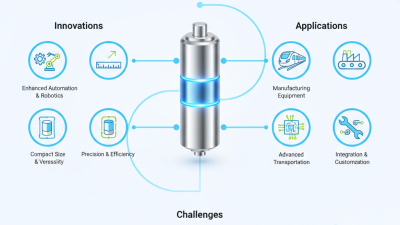
Why Choose a Direct Drive Torque Motor?
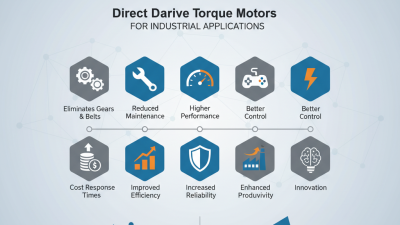
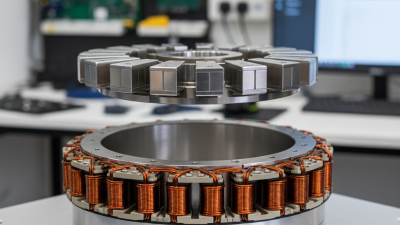
A direct drive torque motor connects directly to the machine’s rotating load. It removes gears, belts, and couplings that often introduce backlash, noise, and maintenance points. This design can deliver high torque at low speed, making it useful for rotary tables, semiconductor stages, robot joints, and precision inspection equipment. The rotor turns the load directly. Fewer mechanical links exist.
Professor Jacek F. Gieras, a recognized authority on direct-drive and permanent-magnet motors, describes the core principle clearly: “Direct-drive motors transfer torque directly to the load, without mechanical transmission elements.” That simplicity can improve positioning accuracy and repeatability. It can also reduce vibration caused by worn gears or flexible belts. In a factory, this difference may appear as a steadier cutting tool or a cleaner inspection image.
However, choosing a direct drive torque motor is not automatically the best decision. The motor may require a larger amplifier, careful thermal planning, and a rigid machine frame. Continuous torque, peak torque, rotor inertia, encoder resolution, and cooling method must match the application. A poor fit can create heat, resonance, or disappointing acceleration. That part is easy to overlook.
Real engineering experience matters. Measure the load before selecting the motor. Test motion profiles under realistic duty cycles. Check the mounting surface, cable routing, and emergency-stop behavior. The benefits are substantial, but they are not magic. A direct drive torque motor rewards accurate design decisions. It also exposes weak ones.
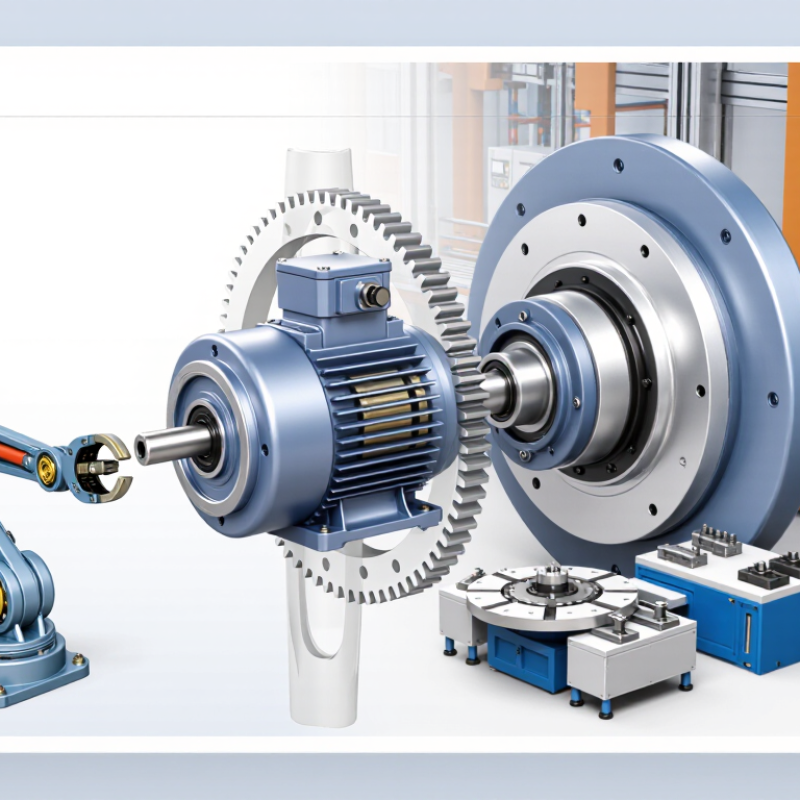
A direct drive torque motor connects the motor directly to the load. It removes the gearbox, belt, and coupling. This creates 1:1 power transmission. One motor revolution produces one load revolution. The result is cleaner motion, lower backlash, and fewer mechanical parts to maintain.
In commissioning work, this difference appears quickly. A rotary table can start without gear noise. Position errors become easier to trace. Heat from gear friction also decreases.
The U.S. Department of Energy’s Motor Systems Market Assessment identifies motor-driven equipment as a major industrial electricity user. The IEA’s Energy Efficiency 2023 report similarly states that electric motor systems consume roughly half of global electricity. Small efficiency gains can therefore matter at scale.
Direct drive is not automatically better. It needs a larger motor diameter and careful thermal planning. A stalled axis may generate serious heat within minutes. Installation alignment also matters. A direct drive torque motor can expose vibration that a gearbox once concealed. That is useful, but inconvenient. IEC 61800-5-2 emphasizes functional safety for adjustable-speed drive systems, reminding engineers to evaluate the complete motion system, not only the motor. In practical terms, measure torque, speed, duty cycle, bearing loads, and cooling conditions before selecting a 1:1 design. Lower part counts help. They do not replace engineering judgment.
A direct drive torque motor produces strong rotational force without a gearbox. Its rotor connects directly to the load, so motion stays immediate and predictable. At low speed, this matters most. A positioning table can start smoothly, hold a heavy fixture, and reverse direction without gear backlash. There is no tooth clearance to cross. That improves repeatability during indexing, scanning, and tension control. It also reduces mechanical wear, noise, and maintenance points.
In practical commissioning, engineers should check continuous torque, peak torque, heat dissipation, and encoder resolution. High torque alone is not enough. A motor may meet a short acceleration target but overheat during slow, continuous operation. Direct drive systems can also require careful tuning because the load inertia acts directly on the motor. The response may feel excellent, but poor control settings can create vibration. This is where selection becomes less obvious.
Tips: Measure the real load inertia. Test at the slowest operating speed. Leave thermal margin. Check cable movement and bearing stiffness, too. Do not assume zero backlash means zero error; mounting flex, encoder offset, and structural vibration still influence accuracy. A direct drive design can be simpler, although it is not always the easiest solution.
A direct drive torque motor connects the rotor directly to the load. This arrangement removes gearboxes, belts, and extra couplings from the power path. Fewer mechanical interfaces usually mean lower friction, less backlash, and reduced maintenance. In practical testing, efficiency can exceed 90% under suitable speed, torque, and temperature conditions. That figure needs context.
A reliable measurement requires more than comparing input and output readings. Engineers should record electrical power, shaft torque, rotational speed, bearing temperature, and operating time. A calibrated torque sensor can reveal losses that a simple wattmeter may miss. At a production workstation, even a small efficiency gain can reduce heat around the motor. Cooler surfaces often support steadier performance during long shifts.
The result is not always perfect. Efficiency may fall at low speed, during rapid acceleration, or near the motor’s maximum torque. Installation alignment also matters. A slightly uneven load can create vibration and unexpected mechanical loss. I have seen impressive test results change after the motor was connected to a real machine. Laboratory figures are useful, but field measurements deserve greater trust. Direct drive systems may also require careful control tuning, which some applications underestimate.
A direct drive torque motor connects the motor directly to the load. This removes gearbox backlash, compliance, and lubrication concerns. For precision motion control, that mechanical simplicity can improve positioning consistency. However, smooth rotation is not automatic. Torque ripple below 1% requires careful design and honest measurement.
In practical testing, engineers should define the calculation clearly. Is the value peak-to-peak torque divided by rated torque, or an RMS result? These methods can produce different conclusions. A calibrated torque sensor, stable current loop, and high-resolution encoder are essential. Test speed, temperature, load position, and filtering must also be recorded. Keep it repeatable. That detail matters.
I have seen promising results change after the motor reached operating temperature. Thermal expansion, bearing friction, mounting stiffness, and cable drag can all affect measured ripple. A direct drive motor may perform below 1% in a controlled laboratory test, then behave differently inside a machine. Engineers should test the complete axis, not only the motor. In scanning stages, rotary tables, and inspection equipment, low ripple can reduce velocity variation and image distortion. Still, a lower number is not always better if the measurement ignores real operating conditions. One unresolved question remains: does the ripple stay below 1% during acceleration, reversal, and continuous production use?
A direct drive torque motor connects directly to the load, removing gears, belts, and their hidden errors. This structure reduces backlash and transmission compliance. The result can feel immediate, especially during slow, precise movement.
Feedback resolution changes the picture further. A 20-bit encoder provides about one million counts per revolution. A 26-bit encoder provides over 67 million. That difference helps the controller detect smaller position changes.
It does not automatically create equal mechanical accuracy. Bearing runout, thermal expansion, vibration, and installation errors still matter.
Resolution is not accuracy.
In practical commissioning, high-resolution feedback can make smooth motion easier to tune. A rotary table may settle with fewer visible corrections. A camera stage may hold position more quietly. Conventional servo systems can still perform well, especially when their gearing matches the application. However, gear wear and backlash may become noticeable after repeated reversals.
I once assumed that more encoder bits would solve every positioning problem. That assumption was wrong. A poorly aligned load can waste the benefits of advanced feedback. Cable shielding, grounding, sampling rate, and control-loop bandwidth also influence real results. Engineers should measure repeatability under operating temperature, not only inspect encoder specifications.
The strongest case for a direct drive torque motor appears when low speed, frequent reversals, and compact mechanics matter. It suits applications where lost motion is expensive. Yet the motor, feedback device, bearings, and controller must be evaluated as one system. High resolution is valuable, but only when the machine can use it.
Sierramotion engineers help customers design solutions to complex motion problems. Whether a simple coil, or a precision motion assembly working in vacuum, Sierramotion has the experience to create a solution that works the first time.