Top Compact Floor Scrubbers for Commercial Cleaning
Commercial floors rarely stay clean for long. Entrances collect grit, kitchen corridors hold damp footprints, and narrow aisles leave little room for bulky equipment. A Compact Floor Scrubber can help teams clean these areas with less manual mopping, while keeping equipment easier to maneuver and store. But compact size alone does not guarantee a better result.
The right machine depends on the building, floor surface, and cleaning schedule. Compare scrub width, battery runtime, tank capacity, turning radius, and how easily operators can refill or empty the machine. A smaller scrub path may suit crowded retail aisles, while longer shifts may require fewer charging breaks and larger tanks. Check the manufacturer’s specifications, and consider a supervised trial on the actual floor. Conditions matter.
This guide examines compact scrubbers for commercial settings, focusing on practical features rather than headline claims. It considers maneuverability, cleaning coverage, operator comfort, maintenance needs, and the demands of different facilities. Some trade-offs are easy to overlook: a machine that fits through a doorway may still feel awkward around shelving, and advertised runtime can vary with surface conditions and usage. Real-world testing is useful. So is asking operators what slows them down. A thoughtful comparison can help cleaning managers narrow their choices and select equipment suited to daily work, not just a product description.
What Defines a Compact Floor Scrubber for Commercial Cleaning
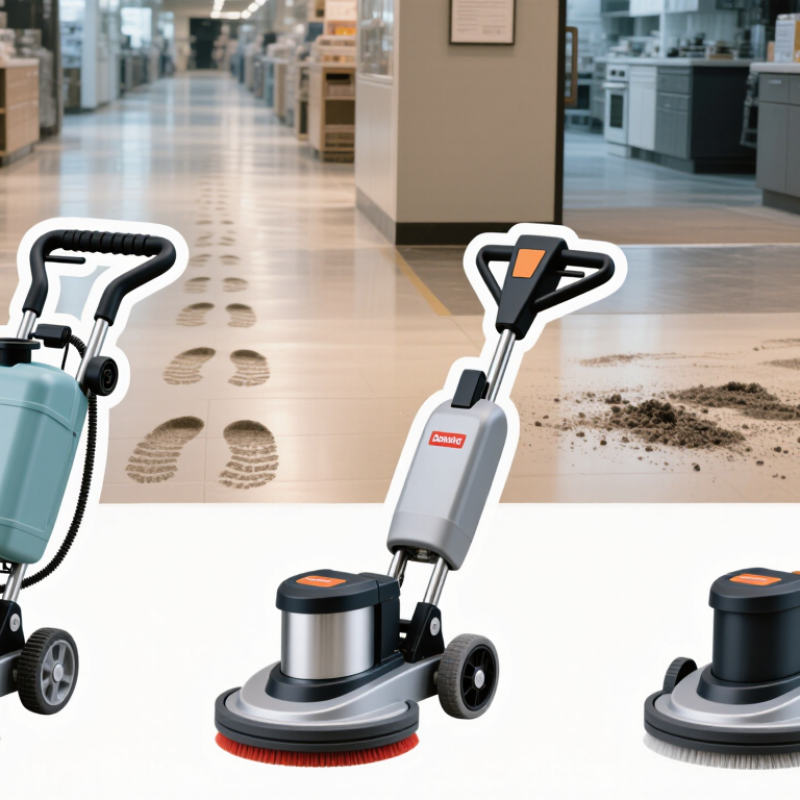
A compact floor scrubber has no universal size cutoff. For commercial cleaning, judge it by the space it can actually navigate: cleaning-path width, turning radius, door clearance, and access to lifts. Measure the tightest aisle, not just the open lobby. Size is not enough.
Tank capacity, battery runtime, brush pressure, and water recovery shape real performance. A unit should cover the planned route without frequent refills, while its squeegee leaves floors reasonably dry. The U.S. Energy Information Administration’s 2018 Commercial Buildings Energy Consumption Survey counted about 5.9 million commercial buildings, spanning varied facility sizes and layouts. That variety makes a single “compact” specification less useful than a site-specific fit check.
Drying performance matters beyond appearance. The Bureau of Labor Statistics reported 885 fatal work injuries from falls, slips, and trips in 2023; this figure covers workplaces broadly, not floor-cleaning incidents alone. A scrubber cannot eliminate that risk, but reliable water pickup is a practical selection factor. Check it on the actual flooring, around corners, and near thresholds. A spec sheet can look convincing; tight corners may disagree. A smaller machine may also leave more edge work, so test the trade-off on a representative route.
How Compact Floor Scrubbers Clean and Recover Water
A compact floor scrubber separates cleaning from water recovery in one pass. Its solution tank feeds water and detergent onto the floor; a rotating brush loosens soil, then a rear squeegee guides the dirty liquid toward a vacuum inlet and recovery tank. On a smooth aisle, the trailing squeegee should leave a visibly damp path that dries quickly. Corners and textured grout are less forgiving.
That detail matters. The U.S. Bureau of Labor Statistics recorded 865 fatal work injuries involving falls, slips, and trips in its 2022 Census of Fatal Occupational Injuries.
That figure covers all workplaces, not scrubber incidents, but it shows why leftover water deserves attention.
Recovery depends on more than suction: brush pressure, travel speed, floor texture, and squeegee condition all affect the result. A nicked blade can leave a thin crescent of water. Small machines turn easily around shelving, though tight turns may still leave missed strips. I have to admit, operators can trust the dry-looking lane too quickly. Check it under the actual lighting, and inspect the recovery tank and blades between shifts. A quick pass is not always a clean pass.
Common Types and Their Commercial Applications
Walk-behind scrubbers suit narrow aisles, cafés, and small retail spaces. Their compact turning radius helps operators clean around chair legs and checkout counters. Choose a disc brush for routine soil on smooth floors; cylindrical brushes can handle textured tile and small debris. Compact ride-on models cover larger supermarket or warehouse aisles faster, but need clear turning space. For tight, cluttered rooms, small orbital machines can reach edges and corners. Small, but useful. Match the machine to the floor, not just the square footage.
The U.S. Bureau of Labor Statistics’ Occupational Outlook Handbook counted about 2.4 million janitor and building-cleaner jobs in 2023. Its 2023 workplace injury report recorded 2.6 million nonfatal injuries and illnesses across private industry. These figures do not prove that scrubbers prevent injuries, but they highlight why cleaning routines and dry, clearly managed floors matter. In practice, check doorway widths, ramps, battery runtime, and where dirty water can be emptied. A large recovery tank sounds efficient, yet it may add weight and complicate tight turns. That trade-off is easy to overlook. Test the machine on the actual floor, especially where grout, floor mats, and tight corners meet.
Key Factors for Choosing a Suitable Scrubber
Choosing a compact floor scrubber starts with the site, not the machine. Map narrow aisles, tight turns, floor transitions, and the areas that need frequent cleaning. Measure doorways and storage space before comparing options. A wider cleaning path can reduce passes, but it may struggle around shelving or café tables. Match tank capacity, battery runtime, brush pressure, and water recovery to the floor type and shift length. Sticky spills near an entrance need more attention than light dust in an office. Check the operating manual and maintenance schedule, not just advertised coverage.
Tips: Walk the planned route with a tape measure. Test turning space near corners and shelves. Test it first. A few minutes of checking can prevent daily workarounds.
Operator comfort matters during repeated shifts. Look for clear controls, adjustable handles, and easy access to tanks and brushes. Consider noise if cleaning happens during business hours. I would not assume the largest battery is always the best choice; added weight can make handling harder in tight spaces. Estimates can still miss real obstacles, so a supervised trial on the actual floor is useful. Notice how quickly dirty water can be emptied and whether the machine leaves damp patches after a pass.
Operating, Maintaining, and Storing the Equipment
Before each shift, inspect the squeegee, brush or pad, wheels, and power cable for wear. Check that the recovery tank is empty and the solution tank contains the right dilution. A quick test on a small area can reveal streaking before it spreads across a whole corridor. Keep the machine moving at a steady pace; rushing often leaves water behind. The U.S. Bureau of Labor Statistics reported 2.6 million nonfatal workplace injury and illness cases in private industry in 2023. That figure is not specific to floor scrubbers, but it underscores why clear routes and prompt spill control matter. Small habits matter.
After cleaning, empty and rinse both tanks, then remove hair and grit from the brush and squeegee. Let parts air-dry where practical; trapped moisture can lead to odor and buildup. Check the manual before charging, since battery-care steps vary by type. Park the scrubber in a dry, ventilated storage area, with the squeegee raised if the equipment instructions allow it. Keep the charging lead clear of walkways. It is tempting to skip the rinse at the end of a late shift. That shortcut can leave tomorrow’s crew with a stubborn mess. A simple maintenance log helps reveal recurring wear, though it only works when someone actually fills it in.