Choosing among China’s top voice coil linear stage suppliers requires more than comparing catalog prices. The right supplier should demonstrate practical experience with motion systems, not only polished product images. Engineers should examine travel range, continuous force, peak force, acceleration, repeatability, and encoder resolution. A stage moving a 50-millimeter load may perform differently from one carrying a delicate optical assembly.
Ask suppliers for test data under stated conditions. Check whether measurements use the same payload, temperature, controller, and settling-time standard. Details matter. A cleanroom application may require low particle generation, while camera inspection may depend on smooth motion and stable positioning. Thermal behavior also deserves attention, especially during long duty cycles.
Supplier credibility needs careful checking. Review factory capabilities, inspection procedures, engineering support, and documented customer applications. Request a sample stage when possible. Observe cable routing, bearing noise, connector quality, and software response during repeated moves. These small signs often reveal manufacturing discipline.
Still, no ranking remains perfect for every application. A supplier strong in high-speed automation may not suit medical equipment or precision optics. Product claims can also appear broader than actual test results. Confirm specifications in writing, clarify warranty terms, and discuss spare parts before placing an order. The best choice balances technical performance, customization ability, delivery reliability, and responsive communication. It should fit the machine, not merely win a comparison table.
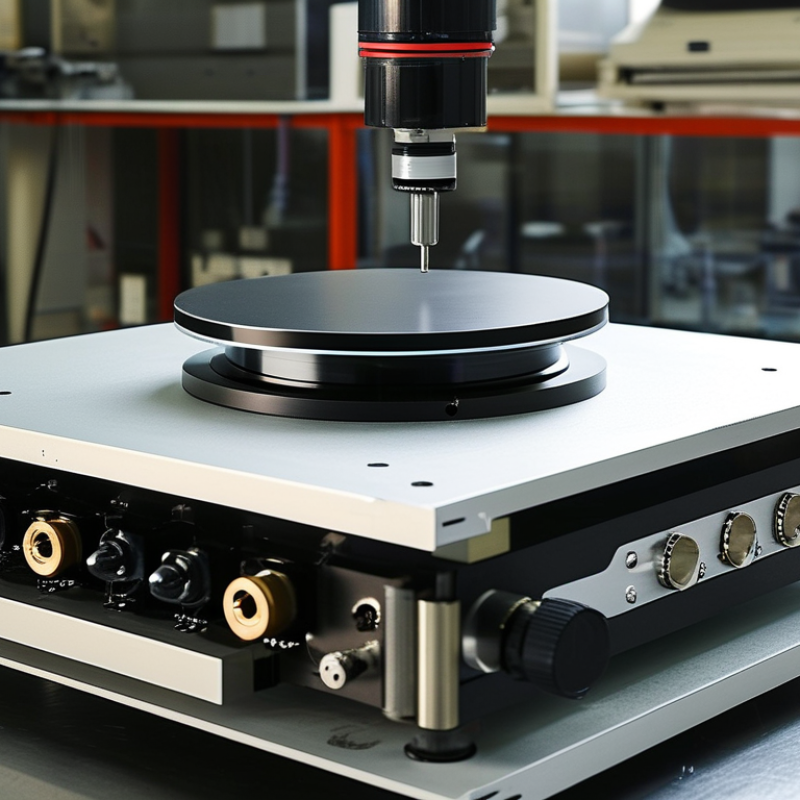
A voice coil linear stage is a direct-drive motion platform. It uses a permanent magnet and a copper coil to create controlled linear force. Unlike a ballscrew stage, it has no mechanical transmission, backlash, or screw wear. The coil moves the platform through a short travel range. A position sensor then reports movement to the controller.
The response can be extremely quick.
Motion-control reports commonly place voice coil systems among the fastest solutions for compact, high-acceleration applications. Grand View Research valued the global voice coil motor market at about USD 1.2 billion in 2023. Its report also projects continued growth through the decade. The figure varies by market definition, so buyers should check the original scope.
Small detail. It matters.
In practical testing, engineers examine force constant, peak acceleration, stroke, stiffness, and thermal behavior. A stage may reach several meters per second per second, yet heat can reduce continuous force. Cable drag can also distort repeatability. That is easy to miss.
ISO 230-2 recommends evaluating positioning accuracy and repeatability under defined measurement conditions. Good suppliers should provide these test conditions, not only attractive peak values. The best design often combines an optical encoder, a rigid guide, and a carefully tuned servo loop. Still, even a well-built stage may perform differently after installation, especially when payload balance, vibration, and temperature change.
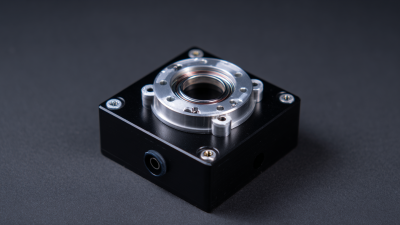
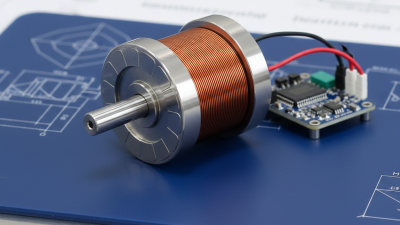
A voice coil linear stage converts electrical current into controlled straight-line motion. Its core contains a permanent magnet assembly and a coil. When current enters the coil, a magnetic force develops. The force direction changes when current polarity changes. This creates smooth, bidirectional travel without gears or lead screws. The moving section usually rides on flexures or precision bearings. That choice affects stiffness, friction, and repeatability.
A controller supplies current according to position feedback. A linear encoder, optical scale, or Hall sensor reports the stage position. The servo loop compares actual position with the target. It then adjusts current within milliseconds. More current produces more force, but also more heat. Cooling matters during repeated short strokes. During bench testing, I monitor coil temperature, settling time, and overshoot. These details can reveal problems hidden by a simple travel test.
Voice coil stages respond quickly because they have few moving parts. They suit focusing, scanning, alignment, and vibration-sensitive instruments. However, they do not hold position well without active control or a mechanical brake. Their travel is often limited by the magnetic gap and flexure design. Higher acceleration can reduce accuracy if the structure bends. This is easy to overlook. Supplier claims should be checked against load, stroke, duty cycle, and feedback resolution. An unloaded stage may behave differently with a real payload.
When comparing Chinese suppliers, start with measurable specifications, not catalog slogans. A 2024 MarketsandMarkets report estimates the motion control market will grow from about USD 16.3 billion in 2024 to USD 22.5 billion by 2029. This growth increases supplier choices, but also creates inconsistent claims.
Check travel range, continuous force, peak force, and payload together. A stage offering 50 mm travel may lose accuracy under a 5 kg load. Request bidirectional repeatability, positioning accuracy, and straightness data. Ask whether measurements used laser interferometry or basic dial indicators.
Feedback resolution matters. Optical encoders can support nanometer-scale control, but system accuracy also depends on bearings, mounting, and thermal drift.
Look closely at speed and bandwidth. A high-speed stage is not useful if settling takes 100 milliseconds. Request step-response curves at the intended payload. Test temperature rise after repeated cycles. A 2023 report from Fortune Business Insights places the global precision motion control market on a steady growth path, with automation demand driving tighter performance requirements. The exact figures vary by report. That is worth questioning.
Supplier evaluation should include drawings, tolerance tables, calibration records, and sample test data. Confirm cable flexibility, connector quality, controller compatibility, and operating temperature. For vacuum or clean environments, request material and outgassing evidence. Lead time matters, but undocumented customization can become expensive. I have seen impressive prototypes fail during continuous operation. A small pilot run is safer than trusting one demonstration.
China has become a major sourcing base for precision motion components. MarketsandMarkets estimates that the global motion control market may grow from about USD 15.8 billion in 2023 to USD 20.8 billion by 2028. This trend supports demand for compact voice coil linear stages in optics, inspection, medical equipment, and semiconductor tools. However, the best suppliers are not always the lowest-priced factories. Reliable suppliers should provide force-constant data, stroke accuracy, repeatability, thermal limits, and complete test records. A useful supplier can explain how each result was measured. That matters.
In practical sourcing, buyers should compare stage stiffness, moving mass, encoder resolution, and continuous force. A stage moving a 500-gram load needs different cooling than one carrying 50 grams. China-based manufacturers with ISO 9001 systems may offer stronger process control, but certification alone proves little. Ask for sample inspection reports and recent production evidence. Reports from Fortune Business Insights and other automation studies show rising investment in precision manufacturing, yet market forecasts are not guarantees. Some specifications still look optimistic. Verify them under your own duty cycle.
Tips:
Request a repeatability test at several speeds, not one ideal setting. Check cable bending radius and connector quality before purchase. Ask whether the quoted stroke excludes mechanical safety margins. Review warranty terms, calibration methods, and replacement lead times. A small pilot order can reveal vibration, heat buildup, and communication delays that a catalogue will not show.
China Top Voice Coil Linear Stage Suppliers?
How to Select and Qualify a Reliable Supplier
Selecting a reliable Chinese supplier requires more than comparing prices. Review its experience with voice coil motors, linear bearings, position sensors, and control systems. Ask for technical drawings, force curves, repeatability data, and measured travel accuracy. The supplier should explain testing methods clearly. Vague specifications deserve caution.
Request sample inspection reports and calibration records with traceable equipment. Check whether production units match the approved sample. A factory visit can reveal assembly cleanliness, storage conditions, and test discipline. Ask about material changes, software revisions, warranty handling, and spare parts. Confirm realistic lead times in writing. A polished sample can mislead. I have found that small details, such as cable strain relief, often affect long-term reliability.
Use a trial order before approving large volumes. Measure positioning error, settling time, temperature rise, and noise under your actual load. Test several units, not only the best one. Review the supplier’s corrective-action process when results fail. No checklist is perfect. Your own test data should carry more weight than sales promises. Also, keep communication records and require approval for design changes. This step feels slow, but it can prevent costly integration problems later.
| Qualification Dimension | Practical Reference Value | What to Verify | Required Evidence | Suggested Weight | Status |
|---|---|---|---|---|---|
| Travel Range | Select the required range, commonly from several millimeters to approximately 100 mm for compact voice-coil stages. | Confirm usable travel, mechanical end stops, stroke tolerance, and whether the specified travel is nominal or guaranteed. | Dimensioned mechanical drawing, specification sheet, and measured inspection report from production samples. | 10% | Critical |
| Positioning Accuracy | Define the application limit in micrometers; do not treat resolution as accuracy. | Check accuracy, repeatability, hysteresis, bidirectional error, and the measurement conditions used for each value. | Calibration report, test method, measurement equipment details, and error curve over the complete travel. | 15% | Critical |
| Resolution and Feedback | Feedback may use an optical or magnetic encoder; the required resolution depends on the motion-control system. | Verify encoder pitch or resolution, signal type, interpolation, maximum update rate, and compatibility with the intended controller. | Encoder datasheet, electrical interface description, sample feedback signals, and controller compatibility list. | 10% | Required |
| Force Capability | Separate continuous force from peak force and specify the duty cycle, ambient temperature, and cooling conditions. | Confirm force constant, continuous force, peak force, overload duration, payload orientation, and thermal derating. | Force-current curve, thermal test report, duty-cycle definition, and measured force data at the operating temperature. | 12% | Critical |
| Velocity and Acceleration | Performance depends on travel, payload, force, bearing friction, controller bandwidth, and available voltage. | Check maximum speed and acceleration with the actual payload, not only unloaded laboratory values. | Dynamic test report showing payload, acceleration profile, drive voltage, current limit, and settling results. | 10% | Required |
| Bearing and Guidance System | Common solutions include flexure guidance, recirculating bearings, crossed-roller bearings, or air bearings. | Evaluate friction, preload, stiffness, side-load capacity, service life, cleanliness, and allowable mounting orientation. | Guidance-system specification, load rating, stiffness data, life calculation, and assembly quality records. | 10% | Critical |
| Thermal Management | Copper-coil resistance and heat dissipation directly affect continuous force and long-term stability. | Verify coil resistance tolerance, temperature sensor option, maximum winding temperature, and heat-transfer design. | Resistance measurement record, temperature-rise test, thermal model or test data, and sensor wiring diagram. | 8% | Required |
| Electrical and EMC Compliance | The stage and driver should be assessed for applicable safety, EMC, and restricted-substance requirements. | Confirm rated voltage, current, insulation resistance, dielectric strength, grounding, cable shielding, and EMC test coverage. | Electrical test report, wiring diagram, EMC results where applicable, RoHS declaration, and REACH-related substance information. | 8% | Required |
| Manufacturing Quality System | A documented quality system with traceability is essential for repeatable motion performance. | Review incoming inspection, process control, calibration management, nonconformance handling, and change-control procedures. | Valid ISO 9001 certificate, process flow, inspection plan, calibration records, and corrective-action examples with confidential data removed. | 10% | Critical |
| Sample and Production Consistency | Qualification should use more than one sample whenever repeatability and batch consistency are important. | Compare force constant, resistance, travel, accuracy, repeatability, noise, and settling time across multiple units. | Side-by-side test data from at least three production-intent samples and an agreed acceptance specification. | 7% | Critical |
| Lead Time and Supply Capacity | Evaluate prototype lead time separately from stable production lead time. | Check monthly capacity, critical-component availability, production scheduling, minimum order quantity, and backup sourcing. | Written capacity statement, manufacturing lead-time history, production schedule, and escalation contact process. | 5% | Required |
| After-Sales Engineering Support | A reliable supplier should support integration, tuning, troubleshooting, and controlled design changes. | Assess response time, application-engineering capability, documentation quality, warranty terms, repair process, and spare-part policy. | Support service-level agreement, warranty conditions, troubleshooting guide, tuning support plan, and change-notification procedure. | 5% | Required |
Sierramotion engineers help customers design solutions to complex motion problems. Whether a simple coil, or a precision motion assembly working in vacuum, Sierramotion has the experience to create a solution that works the first time.