Top 10 Types of Chain Adjusters for Global Buyers
Chain Adjusters may look like minor components, yet the wrong design can complicate installation, accelerate wear, or make routine tension checks harder. Global buyers encounter them in motorcycles, bicycles, industrial drives, and other chain-driven equipment. The name covers several distinct mechanisms. Fit and function matter more than appearance.
OICA reported approximately 93.5 million motor vehicles produced worldwide in 2023. This is useful context for the scale of vehicle manufacturing, but it is not a measure of chain-adjuster demand. Buyers should treat market figures as background, then verify the actual application, operating load, environment, and replacement requirements. ISO 606:2015 specifies dimensions for certain short-pitch transmission roller and bush chains; matching a standard alone does not guarantee that an adjuster fits a particular assembly.
This guide compares ten common types of Chain Adjuster, from simple slotted plates to screw-driven and automatic designs. It considers adjustment range, mounting method, materials, maintenance, and compatibility. A compact screw adjuster may suit a workshop repair, while an exposed machine installation may call for stronger corrosion protection. Details vary by manufacturer. That part is easy to overlook. Product drawings, chain specifications, and equipment-maker guidance should be checked before ordering. The categories are practical, not universal; some products combine features, and terminology differs between suppliers. A careful comparison can narrow the options, though it cannot replace a fit check.
What Chain Adjusters Are and How They Work
A chain adjuster moves the rear axle or tensioner to set chain slack and keep the drive aligned. On a motorcycle, paired adjusters usually sit near the rear axle; turning their screws shifts the axle backward or forward. Small movements matter. After adjustment, the wheel must remain aligned, and the axle fasteners must be secured to the specified torque. Check slack at several points while rotating the wheel, since chain wear can vary around its length.
Designs differ, but the working principle is similar: threaded bolts, cams, sliding blocks, or eccentric axle carriers convert a small adjustment into controlled movement. ISO 606:2015 defines key dimensions for precision roller chains, including pitch and roller diameter; these dimensions help buyers match compatible chain-and-sprocket systems. ISO 10823:2004 provides guidance on selecting roller-chain drives, though it does not set one universal slack value for every vehicle. Follow the equipment maker’s service specification. Numbers vary. A frequent mistake is treating the adjuster marks as a precise alignment gauge; verify alignment with a suitable measuring method. Even careful adjustment can feel imperfect when the chain has uneven wear.
Key Components and Design Features of Chain Adjusters
A chain adjuster does more than remove slack. Its frame, travel slot, screw or cam, locknut, and contact face determine how steadily the chain tracks under load. Screw types offer measured movement and straightforward locking; sliding plates suit compact assemblies, while eccentric cams allow quick, repeatable positioning. Spring-loaded designs can absorb movement, but they may conceal wear if operators stop checking chain elongation. A useful detail: the adjuster should move both sides evenly, not force the chain sideways.
Choose materials and clearances for the actual environment. A threaded spindle needs enough engagement to resist vibration, and a locknut should remain reachable with ordinary tools. Dust, water, and abrasive grit can seize exposed threads; a simple cover may help. ISO 606:2015 defines dimensional and mechanical requirements for short-pitch precision roller chains, so its pitch and component data provide a sound starting point when matching an adjuster to a chain. The U.S. Department of Energy’s Operations & Maintenance Best Practices guide reports 25–30% lower maintenance costs for predictive maintenance compared with reactive maintenance. That is not a chain-adjuster guarantee, but it supports regular inspection. The awkward part: maximum adjustment range is not always the best choice. Too much travel can encourage late correction instead of timely chain replacement.
Ten Common Types of Chain Adjusters for Global Buyers
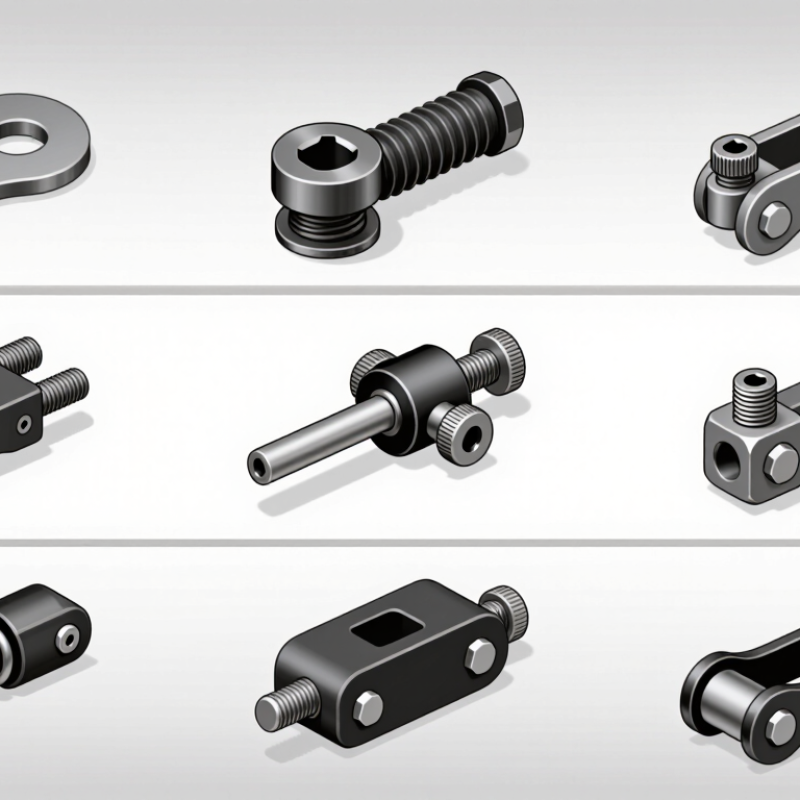
Chain adjusters keep a drive chain within its working range as parts wear or move. The names vary across industries, so buyers should compare drawings, not labels alone. Common types include threaded-screw adjusters, which offer fine positioning; push-bolt adjusters, which move an axle or plate; pull-back screw adjusters, which draw an axle rearward; and sliding axle-plate adjusters, which use slots for controlled movement. Small graduations help, but they do not replace alignment checks.
Eccentric-cam adjusters rotate an offset axle carrier. Snail-cam adjusters use stepped surfaces for quick changes. Slotted-plate adjusters are simple and easy to inspect. Spring-loaded tensioners take up slack automatically, while hydraulic tensioners maintain pressure in systems designed for them. Idler-wheel tensioners guide the chain and can reduce vibration. That is a useful range. Still, these types are not interchangeable.
Selection depends on chain load, travel, mounting space, operating speed, and exposure to dust or moisture. Ask for material details, adjustment range, load data, and installation drawings. Check whether both sides can be aligned evenly; a chain that looks centered may still wear unevenly. In practice, buyers sometimes focus too much on adjustment range. It matters, but service access and replacement-part availability matter too. A careful fit check before ordering can prevent a costly mismatch.
How Chain Adjuster Types Differ in Performance and Application
Top 10 Types of Chain Adjusters for Global Buyers
Chain adjusters differ in how they move the axle, hold tension, and handle vibration. Threaded-screw and bolt-and-slot designs are simple to inspect and suit routine manual adjustment. Eccentric and cam adjusters turn through a set range, making small corrections quick, though their fit must match the frame. Sliding-block types guide the axle along a straight path. Small details matter.
Spring-loaded and hydraulic adjusters compensate for chain slack as components wear, often in engine timing systems. Automatic ratchet designs advance in increments and resist backward movement, but a worn mechanism can make diagnosis harder. Dual-side adjusters help keep the wheel aligned when both sides are set evenly. Quick-release styles favor frequent removal, while threaded-rod designs offer fine control but need secure locking.
Application changes the choice. A dusty work area may call for a sturdy, accessible mechanism that is easy to clean. Compact machinery may benefit from an automatic unit, provided its operating range suits the chain. Not always. Check travel, mounting space, load, corrosion exposure, and the manufacturer’s service guidance before buying. Buyers sometimes focus on adjustment speed and overlook alignment; even a small mismatch can cause uneven wear and noisy running.
Top 10 Types of Chain Adjusters for Global Buyers
How chain adjuster types differ in performance and application
Ratings are qualitative selection guidance on a 1–5 scale, not standardized test results. Actual performance depends on design, materials, chain size, and installation. Screw and sliding types suit many manual take-up applications; spring and hydraulic types provide automatic tensioning where operating conditions call for it.
How to Select Chain Adjusters for International Sourcing
Selecting chain adjusters for international sourcing starts with the machine, not the catalogue. Confirm chain pitch, required take-up travel, mounting space, operating load, and exposure to water or dust. Screw-type adjusters allow fine positioning; sliding plates are simple to inspect, while eccentric designs suit compact layouts. Check that the adjustment range leaves room for chain wear without pushing the axle beyond its safe position. Small details matter. Request dimensioned drawings, material and coating specifications, and tolerance limits before comparing quotations. ISO 606 can help verify roller-chain dimensions, but it does not replace checking the adjuster’s fit with the actual assembly.
Shipping and quality checks also affect the buying decision. UNCTAD’s Review of Maritime Transport 2024 reports that over 80% of world trade by volume moves by sea, so moisture protection and sturdy packing deserve attention. Ask suppliers how they prevent corrosion, mix-ups, and thread damage during transit. Request sample measurements and inspect hole spacing, thread engagement, and coating coverage before approving a production order. A low unit price can still be a poor buy; that lesson is easy to overlook. Confirm lead time, spare-part availability, and packing details in writing, then compare landed cost rather than unit price alone.