
Choosing a Roof Sheet Roll Forming Machine is a production decision, not simply an equipment purchase. The right machine must match material, profile design, output targets, and site conditions. A visually impressive machine may still create unstable dimensions, excessive scrap, or costly downtime.
Industry data supports careful planning. Fortune Business Insights reports continued growth in the global roofing materials market, driven by construction, renovation, and demand for durable building envelopes. Grand View Research also identifies Asia-Pacific as a major roofing market, supported by urban development and industrial construction. These trends create opportunities for roll forming manufacturers. They also increase pressure on quality, delivery speed, and operating costs.
Experience on the factory floor reveals details that brochures often omit. Coil width, thickness tolerance, forming stations, shaft diameter, motor capacity, and cutting accuracy directly influence production stability. A machine that forms 0.30-millimeter steel may not perform reliably with thicker galvanized coils. Small errors matter. Operators also need accessible controls, safe guarding, simple changeover procedures, and dependable technical support.
A lower purchase price can appear efficient. It may not be. Poor alignment, weak rollers, or unsuitable automation can increase maintenance expenses within months. The best evaluation combines supplier experience, verified test samples, production records, and realistic lifecycle costs. Buyers should request references from comparable factories and inspect finished sheets under practical conditions. This guide explains how to compare these factors and select a Roof Sheet Roll Forming Machine with stronger technical confidence. Industry forecasts are useful, but they cannot replace careful engineering judgment.
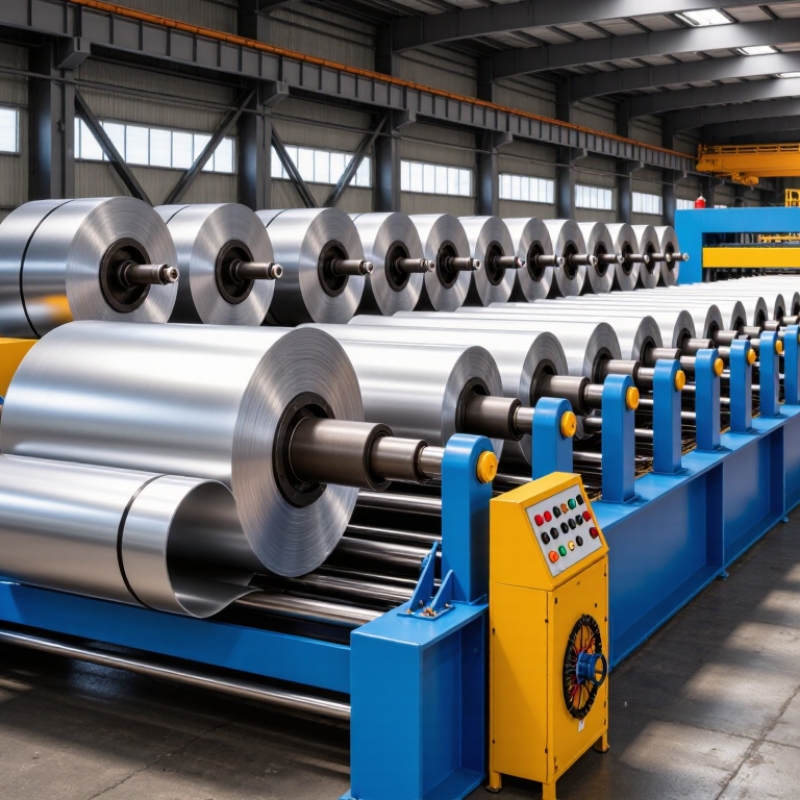
Roof sheet roll forming machines differ by profile, material, and production purpose. Corrugated machines suit agricultural buildings and low-cost warehouses. Tile-profile machines create deeper patterns for residential roofs. Standing-seam machines serve commercial projects requiring concealed fastening and strong weather resistance. Double-layer machines produce two profiles, but they need more floor space and careful changeover planning.
Galvanized steel, pre-painted steel, and aluminum require different forming pressures and roller settings. A machine should match the required thickness, commonly around 0.3 to 0.8 millimeters, rather than chase maximum speed. Faster is not always better.
The World Steel Association reports that construction uses roughly half of global steel demand. This supports continued demand for efficient building-envelope production.
Industrial roofs may need long panels, automatic cutting, and stable stacking. Residential work often values profile variety and quick adjustment.
The Global Buildings Climate Tracker reports that buildings remain responsible for about 30% of global energy demand, so reflective coatings and durable roof designs deserve attention. In factory evaluations, alignment errors often appear after extended runs, not during demonstrations. That is easy to overlook.
Check tolerances, tooling wear, control-system reliability, and operator access. A modest machine with consistent output can outperform a faster machine that wastes coated steel.

Choosing a roof sheet roll forming machine starts with your actual production needs. Estimate daily output, sheet length, profile shape, and required forming speed. A machine designed for 12-hour production may be unnecessary for a small workshop. It may also waste floor space and energy.
Specify the material before comparing machine features. Confirm the coil width, thickness, yield strength, coating, and maximum coil weight. Galvanized steel and pre-painted steel can behave differently during forming. Ask for dimensional tolerances, cutting accuracy, and acceptable surface marks. Roll stations should match the profile depth and sheet geometry. A shallow profile needs different tooling from a deep trapezoidal sheet. I once assumed higher speed meant better value. That was incomplete thinking; unstable feeding can create more waste than slow production.
Tips: Prepare three months of order data. Measure your common sheet sizes. Keep sample coils available for testing. Check whether the uncoiler, guides, rollers, and cutting unit support your heaviest material. A practical trial is more reliable than a polished specification sheet.
Leave room for realistic changes. Customers may request thicker sheets, longer panels, or new profiles later. However, buying excessive capacity can increase maintenance and training demands. Review motor load, changeover time, spare tooling, guarding, and operator access. Clear documentation and repeatable setup procedures also support consistent quality. Small details matter. A machine should fit your materials, workflow, and people, not only your brochure requirements.
Choosing a roof sheet roll forming machine requires more than checking its advertised speed. Capacity must match real production demand, including coil changes, setup time, and rejected sheets. The World Steel Association reported global crude steel production at about 1.89 billion tonnes in 2023, showing the scale of the steel supply chain. Yet abundant steel does not guarantee efficient forming.
Compare usable line speed, material thickness range, coil weight, and cutting method. A machine rated at 30 metres per minute may produce less during frequent profile changes. Ask for output records under your target thickness, width, and yield strength. Measure capacity in finished sheets per shift, not only metres per minute.
Small detail. It matters.
Forming precision deserves equal attention. Check shaft alignment, roller spacing, guide adjustment, cut-length tolerance, and panel twist after stacking. For roofing panels, even a small dimensional error can create visible gaps at overlaps. ASTM E1592 testing evaluates roof panel structural performance, but it does not prove machine accuracy. Request sample panels, inspection data, and repeatability results from several production runs. A laser measurement report is useful, though it may hide variation between coil batches. I would also inspect noise, lubrication access, emergency stops, and changeover time on-site. A cheaper machine can become expensive when operators spend hours correcting alignment. Always test the actual material before signing off the specification.
Supplier quality should be checked beyond polished photographs and confident sales claims. Visit the workshop if possible, and inspect welded frames, electrical cabinets, guards, and assembly accuracy. Ask for production records, material specifications, and recent customer references. A reliable supplier should explain forming tolerances, line speed, power demand, and expected maintenance clearly. Request a factory acceptance test using your actual coil thickness and profile. Small details matter. A loose guide roller can create visible waves across a long roof sheet.
Customization must begin with drawings, not vague promises. Share the required sheet width, thickness range, profile depth, cutting length, and punching positions. Confirm whether the machine handles your steel grade without excessive adjustment. Discuss roll tooling material, shaft diameter, motor capacity, and changeover time. If several profiles are needed, calculate the cost of extra cassettes or tooling. Cheap customization may create expensive downtime later. I have seen buyers focus on maximum speed while overlooking setup losses and scrap.
Technical support often determines whether the machine earns its value. Confirm installation methods, operator training, spare-parts availability, and response times before signing an order. Ask for electrical diagrams, lubrication schedules, fault codes, and video-based troubleshooting guidance. A supplier should also define warranty limits and commissioning responsibilities in writing. Test the support team with practical questions before purchase. Their answers may reveal more than a brochure. No supplier is perfect. Even careful evaluations can miss local voltage issues, inexperienced operators, or changing material quality. Recheck these risks with your maintenance team.
Choosing a roof sheet roll forming machine requires more than comparing purchase prices. Estimate the complete investment, including delivery, installation, tooling, electrical work, and operator training. A low-priced machine may need frequent adjustments. That can increase labor costs quickly. Ask for realistic production data, not only the maximum stated speed.
Maintenance affects long-term value. Inspect the forming rollers, cutting system, bearings, sensors, and hydraulic components before buying. Request a clear spare-parts list and service schedule. For example, replacing worn bearings during planned maintenance is cheaper than stopping production during a large order. Keep records of lubrication, alignment checks, and unexpected failures. Small defects often become expensive downtime.
Energy use also deserves attention. Calculate power consumption per production hour, then compare it with expected output. Add costs for scrap, coil changes, storage, and software updates. A machine producing more sheets is not always more profitable if it creates unstable dimensions. In practical factory assessments, operators often reveal problems that brochures omit. Their experience matters. Be careful with optimistic payback calculations. A spreadsheet can still lie. Leave room for slower first-year production, training delays, and occasional repairs. A reliable machine should deliver consistent sheet profiles, accessible maintenance points, and documented technical support over many years.
| Machine Configuration | Typical Application | Material Thickness | Usable Forming Speed | Installed Power | Estimated Purchase Cost | Installation & Commissioning | Annual Maintenance Budget | Expected Service Life | Estimated 10-Year Ownership Cost |
|---|---|---|---|---|---|---|---|---|---|
| Entry-Level Single-Profile Line | Small-volume production and standard residential or agricultural roofing | 0.30–0.60 mm | 8–12 m/min | 7.5–12 kW | US$18,000–35,000 | US$3,000–7,000 | US$1,200–2,500 | 10–15 years | US$38,000–75,000 |
| Standard Production Line Best balance of cost and capacity | General-purpose roofing contractors, distributors, and small-to-medium metal building production | 0.35–0.80 mm | 12–18 m/min | 12–20 kW | US$35,000–65,000 | US$5,000–10,000 | US$1,800–3,500 | 12–18 years | US$66,000–125,000 |
| High-Speed Production Line | Continuous commercial production with high monthly sheet demand | 0.40–1.00 mm | 18–30 m/min | 18–30 kW | US$65,000–115,000 | US$8,000–15,000 | US$2,500–5,000 | 15–20 years | US$115,000–210,000 |
| Multi-Profile Quick-Change Line | Manufacturers needing several roof panel profiles with reduced tooling changeover time | 0.35–0.80 mm | 10–20 m/min | 15–28 kW | US$75,000–145,000 | US$10,000–20,000 | US$3,000–6,000 | 12–18 years | US$135,000–255,000 |
| Heavy-Gauge Structural Panel Line | Industrial, structural, and high-load roofing applications requiring thicker steel | 0.80–1.50 mm | 6–14 m/min | 25–45 kW | US$90,000–180,000 | US$12,000–25,000 | US$4,000–8,000 | 15–20 years | US$165,000–330,000 |
| Evaluation Dimension | Entry-Level Line | Standard Production Line | High-Speed Line | Multi-Profile Line | What to Check Before Purchase |
|---|---|---|---|---|---|
| Typical Monthly Output | 8,000–20,000 linear meters | 20,000–45,000 linear meters | 40,000–80,000 linear meters | 18,000–50,000 linear meters across multiple profiles | Compare realistic output after setup, coil changes, quality checks, and downtime—not only the advertised forming speed. |
| Labor Requirement | 2–3 operators per shift | 2–3 operators per shift | 3–4 operators per shift | 3–4 operators per shift | Confirm whether loading, cutting, stacking, packaging, and coil handling are manual or automated. |
| Tooling and Profile Flexibility | Usually one dedicated profile | One dedicated profile; optional additional tooling | One high-volume profile with optimized line speed | Several compatible profiles with changeover procedures | Verify panel width, pitch, rib height, material range, and whether tooling changes require major mechanical work. |
| Electrical and Site Requirements | Three-phase supply, level floor, basic material handling | Three-phase supply, reinforced floor, coil storage area | Higher-capacity electrical service, larger staging area, improved material handling | Three-phase supply, additional tooling storage, controlled setup area | Budget for foundation work, electrical installation, lighting, ventilation, safety guarding, and crane or forklift access. |
| Preventive Maintenance Frequency | Daily cleaning; weekly lubrication; quarterly inspection | Daily cleaning; weekly lubrication; monthly alignment checks | Daily cleaning; weekly lubrication; monthly inspection; annual calibration | Daily cleaning; weekly lubrication; frequent changeover and alignment checks | Request a maintenance schedule, recommended lubricants, spare-parts list, and alignment tolerances. |
| Common Wear Parts | Cutting blades, bearings, seals, sensors | Cutting blades, bearings, seals, sensors, chain or coupling components | Cutting blades, bearings, seals, sensors, hydraulic components | Cutting blades, bearings, seals, sensors, changeover components | Confirm local availability, replacement intervals, lead times, and the cost of critical spare parts. |
| Downtime Risk | Medium | Low to Medium | Medium | Medium | Evaluate controller accessibility, service documentation, remote support, mechanical simplicity, and spare-parts availability. |
| Best Long-Term Value When | Demand is uncertain and capital must remain low | Demand is stable and one main profile covers most orders | High utilization can justify greater throughput and automation | Several profiles generate enough margin to offset added complexity | Select capacity based on confirmed orders and utilization; excessive capacity increases idle capital and maintenance costs. |
Sierramotion engineers help customers design solutions to complex motion problems. Whether a simple coil, or a precision motion assembly working in vacuum, Sierramotion has the experience to create a solution that works the first time.