How to Choose the Right Piglets Nursery House?
Choosing the right Piglets Nursery House is not simply a matter of selecting walls, pens, and ventilation equipment. It is a decision about temperature, hygiene, piglet behavior, labor efficiency, and long-term farm performance. A well-designed nursery should keep young pigs warm, dry, calm, and easy to monitor. It should also help workers notice weak piglets before small problems become serious losses.
Dr. Temple Grandin, a respected expert in livestock facility design and animal behavior, offers a useful reminder: “Animals are not things.” That principle matters when comparing nursery layouts. Observe how piglets move, rest, eat, drink, and react to sudden noise. A pen may look efficient on paper, yet create slippery corners or crowded feeding areas in daily use. Details matter. A warm resting zone, adjustable ventilation, non-slip flooring, and simple drainage can influence growth and health.
The right Piglets Nursery House must also match the farm’s climate, stocking plan, cleaning routines, and available staff. Do not trust attractive photographs alone. Ask about air exchange during cold nights, wash-down time, replacement parts, and temperature control failures. Good design is practical.
Perfect housing does not exist.
Even experienced producers can overlook small weaknesses. A careful choice combines measurable specifications with direct observation. It considers today’s piglets and tomorrow’s workload. This guide explores the key questions, common design mistakes, and practical features that can help producers choose a safer, cleaner, and more dependable nursery environment.
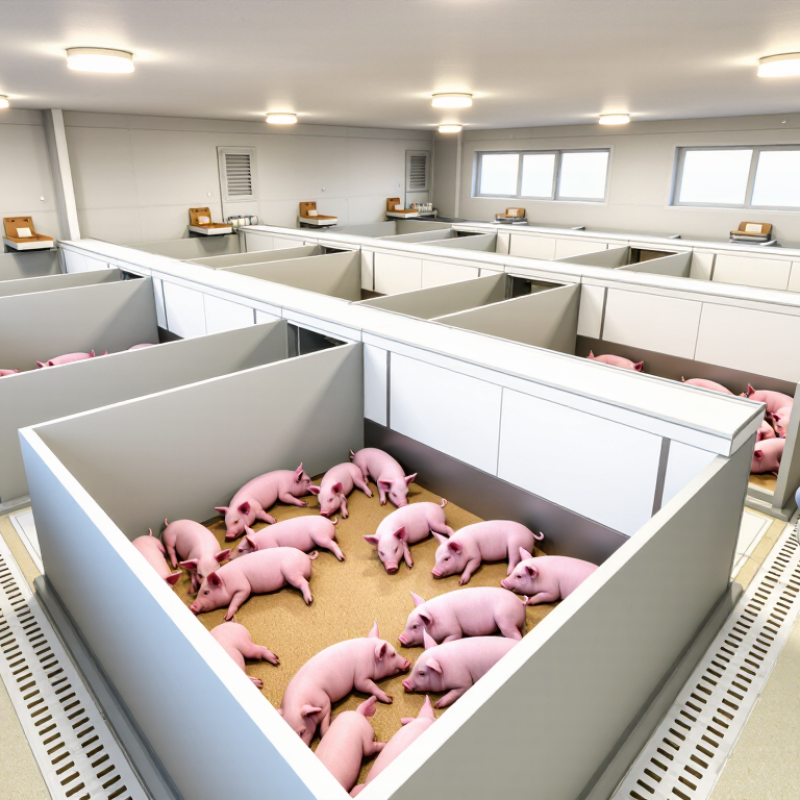
Understanding the Purpose and Requirements of a Piglet Nursery House
A piglet nursery house is more than a smaller barn. It is a controlled bridge between weaning and stronger growth. After separation from the sow, piglets face new feed, unfamiliar groups, and temperature changes. The room should reduce those pressures, not merely hold animals. During practical inspections, I look for dry resting areas, easy access to water, and calm movement paths. A cold corner can turn a well-planned room into a stressful one. Small details matter.
Its design must match piglet age, body weight, local climate, and expected group size. Insulated walls help maintain stable temperatures, while adjustable ventilation removes moisture, dust, and stale air without creating drafts. Floors need grip, drainage, and a surface that remains comfortable for small feet. Feeders should limit competition, and drinkers must be reachable without forcing weaker piglets aside. Lighting should support inspection and normal activity. Keep cleaning areas separate where possible. Dirty equipment can undermine good routines.
Reliable management depends on daily observation. Check breathing, coughing, manure consistency, feed intake, and piling behavior. Record temperature and humidity at piglet level, not only near the door. I once underestimated a ventilation setting because the adult reading looked acceptable. The piglets still crowded together at night. That mistake was useful. Requirements are not fixed numbers, and the nursery house needs adjustment as weather and piglet size change. Staff should wash hands, remove waste, and inspect every pen quickly. A complicated system is not always a better system.
Assessing Piglet Health, Age, Size, and Housing Capacity
How to Choose the Right Piglets Nursery House?
Piglet health should guide the building decision, not its empty capacity. The USDA APHIS Swine 2012 report recorded preweaning mortality at approximately 15% in surveyed U.S. herds. That figure makes weak ventilation, chilling, and poor hygiene expensive risks. Check piglets for bright eyes, dry navels, steady breathing, and full bellies. Watch them walk across the pen. Reluctance, coughing, or uneven movement deserves investigation before placement.
Age and size must be assessed together. The European Commission’s Council Directive 2008/120/EC generally requires piglets to remain with the sow for at least 28 days, with limited exceptions from 21 days. Early-weaned pigs need tighter temperature control and easier access to feed and water. Smaller piglets should not share crowded pens with much heavier groups. A nursery house should provide a warm, draft-free resting area, while allowing cooler space for pigs seeking relief. Newborn piglets may need temperatures near 30–34°C, while older nursery pigs require less heat.
Capacity calculations should use usable floor area, not total floor area. Include feeders, drinkers, walkways, treatment space, and cleaning gaps. NRC’s 2012 swine nutrition report also emphasizes that intake and growth change with body weight, so one fixed stocking plan can mislead. I would leave a modest reserve, perhaps 5–10%. It feels inefficient. Still, overcrowding can increase fighting, wet floors, respiratory pressure, and uneven growth. A clean spreadsheet can hide dirty reality. Check the pens after a full feeding cycle, not only during inspection.
Comparing Nursery House Designs, Materials, and Insulation
Choosing the right piglet nursery house requires more than comparing prices. The design must control temperature, airflow, hygiene, and daily labor. A curtain-sided house offers flexible ventilation and works well in mild climates. However, wind can create cold floor-level drafts. A fully enclosed house provides steadier conditions, but it depends heavily on reliable ventilation equipment and careful maintenance.
Materials affect both durability and cleaning. Galvanized steel frames resist corrosion when humidity is high. Concrete floors should have a slightly rough finish for grip, yet they must remain smooth enough for pressure washing. Insulated wall panels reduce heat loss and make temperature control easier. Their joints need proper sealing. Small gaps can collect dust, moisture, and bacteria. That detail is easy to miss.
Insulation thickness should match the local climate, stocking density, and heating plan. In cold regions, roof insulation deserves special attention because heat escapes upward. In warmer regions, excessive insulation without enough ventilation may trap heat and humidity. Monitor piglet behavior, not only the thermometer. Huddling suggests cold stress; spreading far from the heat source may indicate overheating. Fresh air matters.
There is no perfect layout. Door placement, service access, and cleaning routines can change performance significantly. A design that looks efficient on paper may slow workers during washing and inspection. I would test the house during one difficult season before making a full investment. Small operational flaws often appear later.
Planning Ventilation, Temperature, Lighting, and Hygiene Systems
Choosing the right piglet nursery house starts with environmental control, not wall materials. AHDB guidance commonly places newly weaned piglets near 26–28°C, then recommends gradual reduction as their weight and hair cover increase. A cold floor can defeat a warm air reading. I would check temperature at piglet height, beside the drinkers and resting area. Small data loggers reveal changes that a single wall thermometer misses.
Ventilation must remove moisture, dust, carbon dioxide, and ammonia without creating drafts. Teagasc pig-unit guidance identifies controlled air movement as essential for respiratory health and feed intake. Keep inlets clean and direct incoming air along the ceiling. Do not blow air onto sleeping piglets. It sounds simple. It is often poorly adjusted. European welfare rules require at least eight hours of light daily, with minimum illumination of 40 lux. Use even, gentle lighting, and inspect dark corners where wet bedding can remain unnoticed.
Hygiene planning needs flow, not just disinfectant. Use all-in, all-out movement where practical, remove organic matter, wash surfaces, allow drying, then disinfect according to the product label. The United States Department of Agriculture links strong sanitation programs with lower disease pressure, but cleaning quality varies greatly between workers. Keep separate equipment for dirty and clean areas. Record water-line flushing, room drying time, and inspection results. I would also review the system after each batch, because the original plan will rarely fit real pig behavior perfectly.
How to Choose the Right Piglets Nursery House?
Planning ventilation, temperature, lighting, and hygiene systems for a stable nursery environment.
Ventilation Plan minimum ventilation at approximately 1.7–3.8 m³/h per pig as nursery pigs grow from about 7 to 30 kg. Final rates should be adjusted for pig weight, indoor temperature, humidity, and air quality.
Temperature A practical starting point is about 29°C after weaning, reduced by approximately 2°C per week as piglets adapt and increase body weight.
Lighting A common management schedule is approximately 16 hours of light and 8 hours of darkness each day, with even light distribution across the pen.
Hygiene Use all-in/all-out management where possible. Remove organic matter, wash, disinfect, and allow surfaces to dry before restocking; a 5–7 day turnaround supports effective cleaning and drying.
The chart shows practical weekly temperature setpoints and a relative-humidity target of 60–70%. Actual settings should be verified against local animal-welfare requirements, building design, and environmental monitoring.
Evaluating Safety, Maintenance Needs, Costs, and Future Expansion
How to Choose the Right Piglets Nursery House?
Safety and maintenance should guide the first inspection. Check for rounded edges, non-slip flooring, protected cables, and clear emergency access. Stable ventilation matters because damp air increases respiratory stress and floor moisture. Install sensors where staff can read them without entering every pen. Removable panels and accessible drains reduce cleaning time, although they may increase the purchase price. A 2021 U.S. pork life-cycle assessment reported a 25.9% reduction in the sector’s carbon footprint since 1960, partly through better resource efficiency. Efficient fans and insulated walls support that direction.
Costs need more than a quotation. Feed commonly represents about 60–70% of livestock production costs, according to USDA economic analyses. Energy, labor, repairs, and piglet losses also shape the real payback. Compare annual operating costs, not only construction costs. Leave space for extra rooms, wider service corridors, and larger electrical capacity. Modular expansion is usually easier than rebuilding beside occupied pens. I would not trust a perfect spreadsheet alone. Staff movement and cleaning habits can expose weaknesses quickly.
Tips: Ask for a five-year maintenance estimate. Test the ventilation alarm before signing. Measure water flow at every drinker. Keep expansion routes separate from daily pig movement. Use independent temperature records, because one faulty sensor can mislead the whole house.