
Call Today: 916-259-1868

How to Choose the Best China Generator Factory?

Choosing the right China generator factory is more than comparing prices or reading a polished product catalog. Buyers need to confirm that a manufacturer can match the generator to the actual load, operating environment, and service requirements. The International Energy Agency’s Electricity 2024 report projects global electricity demand will grow by an average of 3.4% annually through 2026. That matters. Reliable backup power can be critical where grid supply is limited or interruptions are costly, but demand growth alone does not prove a particular factory is dependable.

A practical assessment starts with verifiable details: engine and alternator brands, rated output, fuel consumption, noise levels, and protection features. Ask for load-test records and confirm that performance claims align with the relevant ISO 8528 requirements. Check whether the factory can provide serial-number traceability, clear warranty terms, spare parts, and responsive technical support. These details are less visible than a low quotation. They often matter more after delivery.

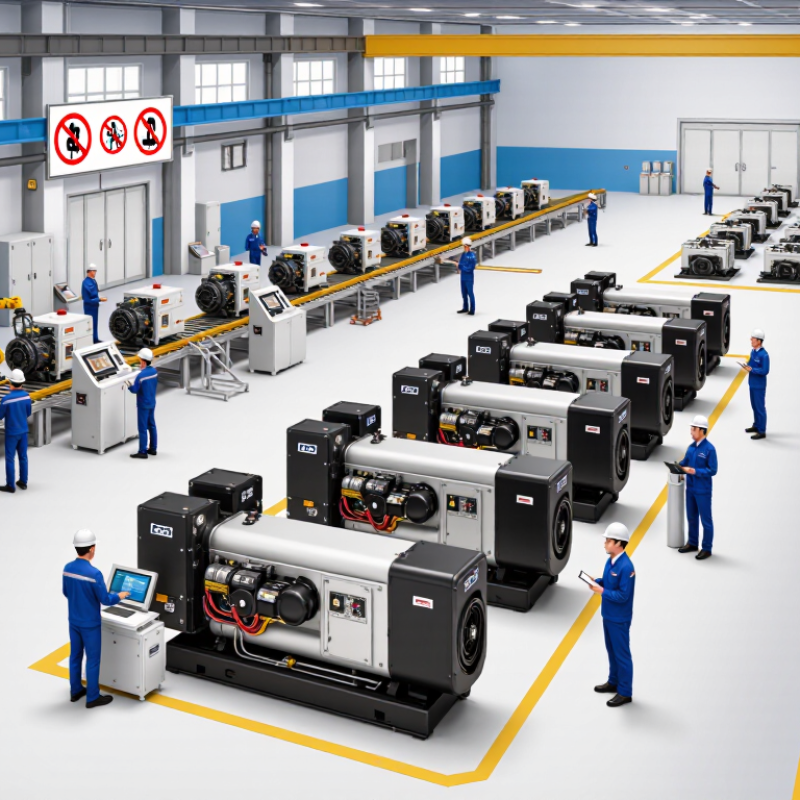
Factory visits or live video inspections can help buyers see assembly lines, testing equipment, and finished units—not just showroom samples. Request references for projects with similar capacity and working conditions, then verify them where possible. Be cautious with broad claims such as “top quality” unless supported by test evidence. Even a thorough review cannot guarantee every unit will perform perfectly; maintenance and installation also matter. The goal is a supplier whose technical evidence, production capability, and after-sales commitments can be checked before purchase.
How to Choose the Best China Generator Factory?

Define Your Generator Requirements and Operating Conditions

Before contacting a China generator factory, define what the generator must power and where it will operate. List each load, its running wattage, and the extra current needed when motors start. A pump or compressor can briefly demand far more power than its nameplate running figure suggests. Add the required voltage, frequency, and phase, plus whether the unit will serve as standby or run for long shifts. Small details matter. A mismatch can cause nuisance shutdowns or shorten equipment life.

Operating conditions shape the specification too. Record the site’s altitude, typical temperature, humidity, dust, and available ventilation. At high elevations or in hot weather, engine output may need adjustment; ask the factory to state any derating clearly. Note expected daily runtime, fuel access, noise limits, and space for maintenance. Share these details with the supplier and request a written configuration, rated output, and relevant test results. I would not rely on a single “maximum power” figure; it can hide the continuous capacity you actually need. If loads may grow, estimate that increase, but avoid oversized equipment that spends most of its life lightly loaded. A small uncertainty is normal—mark it, and ask how the proposed unit handles it.

Assess Factory Experience, Certifications, and Production Capacity

When evaluating a China generator factory, ask how long it has built the exact generator type and power range you need. Request production records, anonymized delivery examples, and references for comparable projects. Speak with a past buyer, not only the sales team. Small details matter: Can the factory show its engine-alternator matching process, wiring checks, and a dated load-test record? A polished showroom proves little. The IEA’s Electricity 2024 report recorded 2.2% global electricity-demand growth in 2023 and forecast average annual growth of 3.4% for 2024–2026. That pressure makes dependable testing and realistic lead times worth checking.

Treat certifications as evidence to verify, not a shortcut. ISO’s 2022 Survey reported 1,265,216 valid ISO 9001 certificates worldwide; the figure shows broad adoption, not that every certificate covers generator manufacturing. Check the certificate’s scope, issuing body, and expiry date. Ask for product test documents relevant to your destination market, then confirm the test method and serial number. Also inspect capacity: monthly output, workforce by shift, component supply, and the number of load-bank test bays. A factory may promise high volume, yet a single test bay can become a bottleneck. Ask to see a recent production schedule and how rejected units are handled. I would not rely on a factory tour alone; schedules can be staged, and one visit cannot reveal every weak point.

Compare Generator Models, Components, and Quality Controls

How to Choose the Best China Generator Factory?

Compare generator models on duty, not just headline power. The IEA’s Electricity 2024 report projected global electricity demand growth averaging 3.4% annually from 2024 to 2026, increasing the value of dependable backup and prime-power planning.

Start with the real load: motor starting current, expected running hours, ambient heat, and altitude. Check whether quoted output is standby or prime-rated, then compare fuel use at 50%, 75%, and full load.

Small print matters.

Look closely at the engine, alternator, voltage regulator, cooling system, and controller as a complete set. Ask for component specifications, wiring diagrams, service intervals, and replacement-part lead times.

A factory test should record voltage and frequency stability, load-step response, temperature, and noise under defined conditions. ISO 8528-5 provides performance requirements for generating sets; request test records linked to the exact model and rating.

Better yet, witness a load-bank test. Paperwork alone can feel reassuring, but it may not reveal a loose connection or a slow response under sudden load.

Compare the same test conditions across suppliers, and inspect one production unit if possible.

The awkward detail: even a strong factory process cannot prevent every field failure. Make sure the warranty process and technical support are equally clear.

Review Pricing, Customization, Warranty, and After-Sales Support

Price comparisons should use the same configuration, not just the same rated output. Check whether the quote includes the control panel, automatic transfer switch, commissioning, and delivery. Ask for separate prices for routine service and common replacement parts. A low factory price can look convincing until these items appear later. A spreadsheet can still mislead.

Customization should match the site. Share the load profile, altitude, ambient temperature, and required runtime. Ask the factory to confirm how these conditions affect output and fuel use. For warranty terms, get coverage periods and exclusions in writing. Clarify who pays for labor, travel, and shipping when a component fails. Small details matter.

After-sales support deserves equal weight. Uptime Institute’s 2024 Annual Outage Analysis reported that 54% of surveyed data-center operators with a serious outage said it cost more than $100,000. This does not predict every generator buyer’s losses, but it shows why response time matters. Ask where spare parts are stocked, how quickly technicians can respond, and whether remote troubleshooting is available. Request a sample service record or response-time commitment. Then verify it with a recent customer, if possible. I would not rely on a polished promise alone.

Verify Factory Claims Through Samples, Audits, and References

A generator sample can reveal assembly quality, but it cannot prove consistent production. Request a unit matching the proposed specification, then check welds, wiring labels, fasteners, and control-panel readings. Ask for a witnessed load-bank test report showing load steps, operating temperature, voltage, and frequency. Confirm the serial number matches the tested unit. A polished sample is not enough.

Uptime Institute’s 2024 Annual Outage Analysis found that 54% of surveyed operators’ latest significant outages cost over $100,000. Sixteen percent exceeded $1 million. These figures concern data-center operators, not generator buyers, but they show why unverified backup equipment can carry serious costs. During a factory audit, inspect the test bay, calibration records, component traceability, and production quality logs. Check whether the audited site actually builds the quoted model.

References matter too. Ask for three recent buyers with similar output and operating conditions. Contact them directly about delivery, fault response, spare-parts lead times, and performance after several months. IEA’s Electricity 2025 reported that global electricity demand rose 4.3% in 2024, adding pressure to reliable supply. Still, a test report may omit real-world maintenance issues. Ask what failed, not only what passed.