
Choosing the right box production equipment starts with the products you actually make. A Box Manufacturing Machine may form, print, slot, fold, or glue cartons, depending on its configuration. Those functions affect the space, labor, and materials your production line requires. A machine’s advertised speed is useful, but it does not tell the whole story. Real output depends on box dimensions, board quality, changeover time, and operator experience. Details matter.
This guide to top box manufacturing machines for global buyers explains the main options and the questions worth asking suppliers. Compare working size, supported board grades, tooling requirements, controls, and available safety features. Ask for a demonstration using samples similar to your own cartons. Check whether routine adjustments are clear, spare parts can be sourced, and technical support is available in your region. These details may matter more than an impressive specification sheet. Not always obvious.
There is no single best machine for every plant. A smaller operation may value simple setup and flexible runs, while a high-volume facility may prioritize automation and consistent throughput. Buyers should also confirm installation needs, training, warranty terms, and the supplier’s service process before committing. I would not treat any quoted output as guaranteed without understanding its test conditions. A careful comparison helps reveal trade-offs—and sometimes exposes questions the first sales call missed.
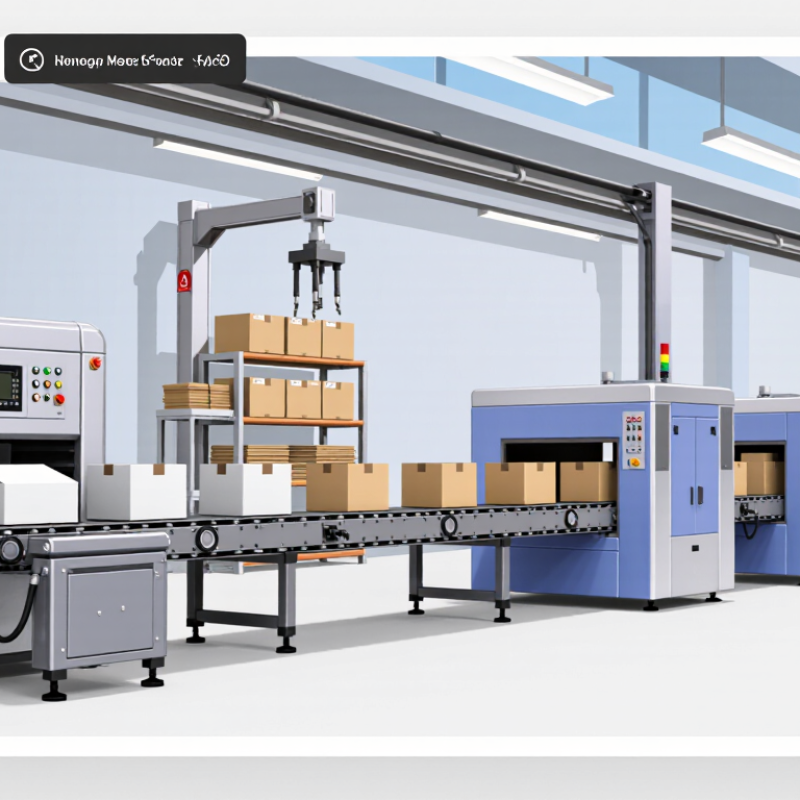
A box line is only as steady as its board supply. At the feeding stage, suction heads or friction belts separate sheets and deliver them to the machine. Operators should check board thickness, warp, and surface dust before setting feed pressure. A crooked blank can travel unnoticed. Photoelectric sensors and adjustable side guides help keep each sheet square, though they cannot correct badly stored stock.
The next stage converts flat board into a box shape through scoring, slotting, or die cutting. For corrugated cartons, crease depth matters: too shallow, and panels resist folding; too deep, and the liner may crack. A short test run reveals uneven scores, trim waste, and feed drift before a full shift begins. This check takes time. Machine capacity should match common board sizes, not just a peak-speed figure on a specification sheet.
At gluing, applicators place a controlled bead along the joint flap, then compression belts hold the seam while adhesive sets. Too much glue can squeeze out; too little may leave a weak bond. Check consistency across several boxes, especially after changing board grade or line speed. The stages interact. A feeder that slips can spoil accurate cutting, and precise cutting cannot rescue poor glue contact. Settings often need small adjustments between shifts; recording them makes production easier to repeat.

Corrugator selection should match flute profile, ply count, and the box’s job. A 3-ply sheet uses one fluted medium between two liners; 5-ply and 7-ply sheets add another or two flute layers. E flute is thin and suits compact, print-focused packs. B flute offers a balance of crush resistance and sheet thickness. C flute adds cushioning and stacking support. Profiles vary by standard and mill, so confirm actual caliper and strength rather than relying on flute names alone.
Scale matters. FEFCO’s 2023 European Database reports approximately 46.8 billion square metres of corrugated board production in Europe in 2022. For buyers, that volume underscores the need to specify board grades clearly across suppliers. On a corrugator, flute-roll condition, heat, adhesive application, and web tension affect bonding and sheet flatness. Small adjustments matter. A 7-ply sheet is not automatically better; extra layers can add weight and cost without fixing an oversized box or weak design.
Tips: Request samples of each proposed grade and test them in the finished box. Check edge-crush or compression results, caliper, and performance after humid storage. Share flute profile, liner and medium weights, sheet dimensions, and target output with the machine supplier. Do not compare ply count alone. A compact E-flute pack may outperform a heavier board for a light product, while a tall, stacked load may need stronger construction.
Typical flute heights for E, B, and C profiles used in corrugated board production.
E-flute is the shallowest profile, often selected for fine printing and compact packaging; B-flute offers a balance of strength and printability; C-flute provides greater cushioning. These rounded values are typical reference heights and vary by specification and paper combination. Three-, five-, and seven-ply describe board construction; the number of plies alone does not determine flute height.
Printing and Slotting Lines: Compare Rated Output in Sheets per Minute
A line’s rated output is useful, but it is not a production promise. FEFCO’s European Database 2022 reports about 49.6 billion square metres of corrugated board production in Europe that year. At this scale, small differences in converting efficiency matter. Compare printing and slotting equipment using the same sheet size, board grade, print configuration, and measurement method.
A line rated at 250 sheets per minute has a theoretical output of 15,000 sheets per hour. Real output falls when operators change plates, clear misfeeds, or adjust registration. That gap matters. Ask whether the quoted rate is a peak speed or a sustained run, and request results for a job resembling your own: for example, a wide sheet with several print colors and tight slot alignment. PMMI’s 2024 State of the Industry report discusses persistent labor and operating challenges across packaging operations; those constraints make quick changeovers and stable feeding as important as top speed. I would still treat any rating cautiously: paper quality, humidity, and operator experience can shift results, and a clean test run may not reflect a full shift.
| Machine configuration | Typical rated output (sheets/min) | Typical maximum sheet size (mm) | Typical print capacity | Typical board range | Best suited to |
|---|---|---|---|---|---|
| Semi-automatic flexographic printer-slotter | 60–120 | 1,200 × 2,200 | 1–2 colors | Single-wall corrugated board | Short runs, basic graphics, and operations prioritizing lower equipment complexity |
| Standard inline flexographic printer-slotter | 120–180 | 1,400 × 2,500 | 2–4 colors | Single- and double-wall corrugated board | General-purpose production of slotted cartons with routine print requirements |
| High-speed inline flexographic printer-slotter | 180–250 | 1,600 × 2,800 | 3–5 colors | Single- and double-wall corrugated board | Medium-to-high-volume work with frequent job changes and more demanding graphics |
| Vacuum-transfer flexographic printer-slotter | 220–300 | 1,800 × 3,000 | 3–6 colors | Single-, double-, and selected triple-wall grades | High-volume production requiring controlled sheet transfer and consistent registration |
| Flexographic printer-slotter with rotary die-cutting unit | 100–200 | 1,600 × 2,800 | 2–5 colors | Single- and double-wall corrugated board | Cartons combining printing, slotting, and rotary die-cut features in one line |
| Flexographic printer-slotter with inline folder-gluer | 120–220 | 1,600 × 2,800 | 2–5 colors | Primarily single-wall; selected double-wall applications | Integrated production of printed, slotted, folded, and glued regular slotted cartons |
| Comparison note: Output figures are indicative rated-speed ranges for common equipment configurations, not guaranteed production rates. Actual throughput depends on sheet dimensions, board grade and warp, print coverage, changeovers, operator settings, and downstream handling. Confirm the manufacturer’s test conditions and the required working speed before purchase. | |||||
FEFCO codes are more than drawing labels. They define panel geometry, flap relationships, and the converting sequence. A FEFCO 0201 regular slotted case needs accurate creasing and slotting before folding and jointing. A 0427-style box uses a different blank layout and folding path. Match tooling to the box style, not just the machine’s maximum sheet size.
FEFCO’s European Database 2022 reports approximately 49.5 billion square metres of corrugated board production in Europe. That scale makes repeatable setups valuable, but the figure is not a machine-selection recipe.
Check feed direction, board caliper, flute, crease-rule height, slot depth, and stripping access. Then compare the folder-gluer’s rails and folding hooks with the panel sequence, glue flap, and required speed. Small details matter.
Run a full-size sample using the actual board, then inspect squareness, fold memory, and glue-line position. A clean CAD drawing can hide trouble.
A setup can still disappoint. Creases may spring back, especially when board grade or flute changes. The specification sheet may look complete; it rarely is.
A global buyer should compare boxes per minute against real job conditions, not the fastest figure on a sales sheet. Ask suppliers to run your board grade, box dimensions, print requirements, and batch size. Record good boxes per minute after rejects, not just machine speed. PMMI’s 2024 State of the Industry report estimated U.S. packaging machinery shipments at about $10.9 billion in 2023, showing a substantial, evolving equipment market. That figure is context, not proof that any one machine will fit your line.
Measure setup time during a witnessed changeover. Include die changes, feeder adjustment, and the first acceptable box. A ten-minute setup can matter more than a higher rated speed when orders are short. It depends. Request a timed trial with your operators, then note where manual adjustments slow the process. A tidy demonstration may not reflect a tired night shift.
Confirm voltage, phase, frequency, full-load current, and compressed-air needs before signing. Ask for electrical drawings and clarify local connection requirements. For European installations, request the relevant CE conformity documentation; for North American sites, confirm whether UL certification or field evaluation is required by the authority having jurisdiction. CE and UL are not interchangeable. Check guards, interlocks, emergency stops, and documentation against the destination site’s requirements, then have a qualified electrician verify the installation.
Sierramotion engineers help customers design solutions to complex motion problems. Whether a simple coil, or a precision motion assembly working in vacuum, Sierramotion has the experience to create a solution that works the first time.