Choosing a linear motor drive supplier in China is not just a matter of comparing prices. The right partner must match the machine, motion profile, and production environment. Linear motors move a load directly, without a traditional rotary motor and screw assembly. That can support fast acceleration and precise positioning. It can also make system design more demanding. Alignment, heat, cabling, and control tuning all matter.
The supplier landscape includes manufacturers with different strengths, from compact positioning modules to customized automation systems. A polished product page is only a starting point. Buyers should check continuous and peak force ratings, encoder compatibility, controller options, and service response times. Ask for clear technical documents and application references. If possible, test the drive with a representative load and travel distance. Small details count. A cable that limits movement or a controller that lacks the needed interface can delay integration.
This guide looks at how to assess Chinese suppliers using practical, verifiable criteria rather than broad claims. It considers product range, engineering support, quality processes, customization, and communication. No shortlist can fit every project. Even a capable supplier may not suit a particular budget or production line. That is worth remembering. Compare specifications carefully, confirm claims directly, and treat sample testing as part of the decision—not an optional extra.
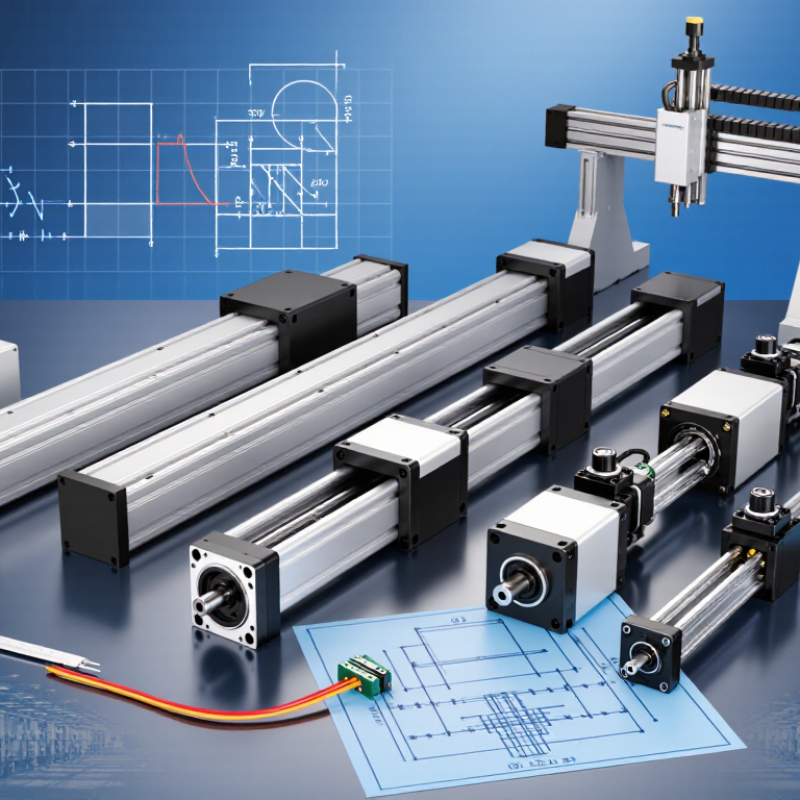
A linear motor drive is the electronic unit that controls a motor producing straight-line motion. Unlike a rotary motor paired with a ball screw, a linear motor creates thrust directly along a track. The motor’s coil assembly interacts with a magnetic rail, while the drive supplies carefully timed current to generate movement. Its controller can manage current, speed, and position. No gearbox.
A position sensor, such as a linear encoder, reports the moving stage’s location to the drive. The drive compares that reading with the target and adjusts current to correct errors. On a machine, this might move a carriage smoothly between two points on a metal rail. Fast response is possible, but accuracy depends on alignment, feedback quality, and proper tuning. Heat matters, too: repeated high-force moves can warm the motor and affect performance. In real installations, the control settings often need adjustment after the motor is mounted. The theory is tidy; the machine is less so.

Leading Chinese linear motor drive suppliers stand out through measurable engineering, not broad claims. They specify continuous and peak force, thrust ripple, encoder resolution, thermal limits, and duty cycle. Ask for test curves at the intended speed and load. A polished brochure is not enough. That matters.
The scale of China’s automation market raises the bar for dependable production. The International Federation of Robotics reported 276,288 industrial robot installations in China in 2023, about 51% of global installations. This is not a linear-motor sales figure, but it signals a demanding ecosystem for motion-control components. Look for suppliers that document winding inspection, burn-in procedures, traceability, and repeatability across production batches. Request sample data, not only a stated accuracy value.
Integration support also separates capable suppliers from catalog vendors. They should provide clear guidance for drive tuning, cooling, cable routing, and controller compatibility, with engineers available during commissioning. China’s National Bureau of Statistics reported industrial-robot output of 429,500 units in 2023. That wider manufacturing base can support local supply chains, though it does not guarantee quality. One practical check: compare measured positioning stability after hours of operation, when motor heat may shift performance. Some suppliers may not publish enough long-run data; treat that gap as a question, not proof of poor quality.
This is a capability-based evaluation guide, not a ranking of named companies. Available specifications vary by product model and should be confirmed in the supplier’s current datasheets and quotations.
| Evaluation Dimension | Features to Look for in a Capable Supplier | Evidence to Request or Check |
|---|---|---|
| Motor portfolio | A product range that may include iron-core and ironless linear motors, with options suited to different force, speed, and cogging requirements. | Compare motor construction, force curves, dimensions, and stated application limits in model-specific datasheets. |
| Force and duty performance | Clearly specified continuous and peak force ratings, operating conditions, and duty-cycle limits. Continuous force depends on thermal conditions and cooling. | Ask for force–speed and thermal data, including the assumptions for ambient temperature, mounting, and cooling. |
| Thermal management | Documented thermal limits and, where the design requires it, options for heat sinking or liquid cooling. | Review installation guidance, temperature limits, cooling requirements, and thermal test conditions for the selected model. |
| Feedback compatibility | Support for suitable position-feedback devices and clear compatibility information for the drive, motor, and controller configuration. | Request a system wiring diagram, feedback-device specifications, and a written confirmation of the proposed component pairing. |
| Drive and control integration | Drive options with documented motor matching, control modes, protection functions, and supported industrial communication interfaces. | Check the drive manual for supported interfaces, configuration tools, alarm handling, and commissioning requirements. |
| Accuracy claims | Performance claims that distinguish motor characteristics from complete-stage performance. Positioning results also depend on the encoder, mechanics, tuning, and test setup. | Ask for the measurement method, test conditions, travel length, feedback resolution, and whether the figure refers to repeatability or accuracy. |
| Customization and engineering | Ability to discuss travel, mounting, cable routing, cooling, and integration needs, while identifying which changes are standard or custom. | Request a written specification review, interface drawings, and a clear record of design changes and acceptance criteria. |
| Quality management | A documented quality process covering production checks, traceability, and handling of nonconforming products. | Request current quality-system certificates where applicable, certificate scope, and sample inspection or test records. |
| Testing and documentation | Product-specific datasheets, installation instructions, wiring information, and test results that match the quoted configuration. | Check that documents identify the model and revision, and that stated ratings align across the datasheet, quotation, and test report. |
| Delivery and after-sales support | Clear information on production lead time, spare parts, warranty terms, troubleshooting, and technical support arrangements. | Confirm lead time and warranty in writing, and establish how technical issues, replacement parts, and service requests are handled. |
Chinese suppliers of linear motor drive solutions include component manufacturers, motion-control integrators, and automation equipment firms. They may supply motors, servo drives, controllers, cables, and commissioning support as a matched system. Some focus on standard modules; others tailor travel length, thrust, and feedback to a machine. That distinction matters.
For a packaging line, ask how the drive handles repeated acceleration, heat, and stop accuracy. Request useful data: continuous and peak thrust, speed range, encoder resolution, cooling needs, and duty cycle. Ask for test reports or a witnessed trial with a load close to yours. Paper specs are only a start. An actual carriage can behave differently.
Evaluate application engineering, spare-part availability, documentation, and response times across time zones. Check that wiring diagrams, alarm lists, and tuning instructions suit your maintenance team. Discuss PLC integration, safety interlocks, and the existing motion network before approving a design. Factory visits can reveal assembly practices, but they do not replace independent checks. Selection is rarely tidy; even a capable supplier may need several tuning rounds. Allow room for that.
China’s linear motor suppliers should be compared on measured performance and service depth, not brochure claims. Ask for force-speed curves across your required stroke, plus continuous and peak thrust ratings. Check encoder feedback, positioning repeatability, and temperature rise after a realistic duty cycle. For a gantry or pick-and-place system, request test data using your actual payload and acceleration. Numbers help. Fit matters more. A capable supplier should also explain cooling, cable routing, tuning, and operating limits in plain language.
Market scale is useful context, not proof of motion expertise. The International Federation of Robotics’ World Robotics 2024 report says China installed 276,288 industrial robots in 2023, about 51% of global installations. That figure signals a large automation base; it does not rank linear motor suppliers. Compare support by asking who commissions motion profiles, how quickly application engineers respond, and whether replacement coils and encoder troubleshooting are available locally. Ask for a clear escalation path. During a factory visit, watch a full-speed cycle, then inspect the motor temperature and positioning logs. One weakness in many evaluations: peak speed gets too much attention, while heat and tuning time get too little. I would make that mistake without a test log.
A Physics-Based Technology Benchmark for Comparing Force and Speed
The bars are calculated from the mechanical power relationship P = F × v, assuming a constant 1 kW output; they are reference values, not supplier performance data. Actual motor force depends on the motor, drive, thermal limits, and operating conditions. Compare suppliers using published continuous-force and speed ratings, and assess support separately through documented commissioning, diagnostics, and service-response provisions.
A strong linear motor drive supplier should match the machine’s real operating conditions, not just quote a peak thrust figure. Share the moving mass, required acceleration, stroke, duty cycle, and target positioning accuracy. A 12-kilogram carriage running short, rapid cycles creates different thermal demands from a slow inspection stage. Ask how the supplier calculates continuous force and what cooling assumptions the figures use. Fit matters. Check encoder resolution, cable routing, controller compatibility, and available mounting dimensions before comparing prices.
Request test data for repeatability, temperature rise, and performance at your intended speed. Ask for a sample acceptance plan, clear drawings, and a named engineering contact who can review integration issues. Useful answers include measurable limits, not only claims such as “high precision.” For Chinese suppliers, confirm how design changes, spare parts, and technical support are handled across time zones. A video call around a working test bench can reveal more than polished product images. Still, one demonstration cannot prove long-term reliability; request references or test records where available. Leave room in the schedule for prototype adjustments, since fit and cable access are easy to underestimate.
Sierramotion engineers help customers design solutions to complex motion problems. Whether a simple coil, or a precision motion assembly working in vacuum, Sierramotion has the experience to create a solution that works the first time.