What Are the Best Expansion Screw Types in 2026?
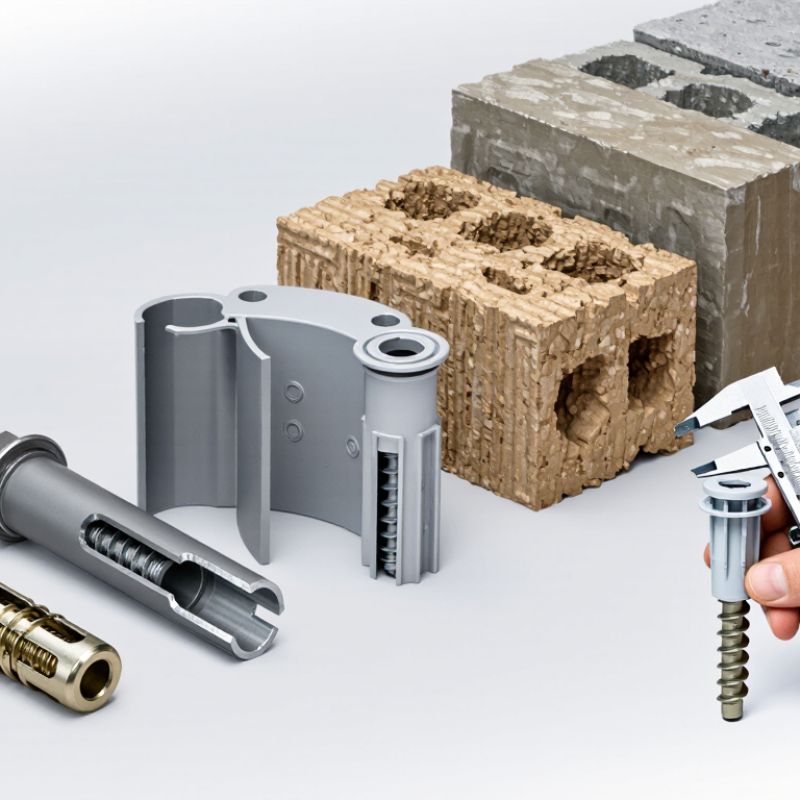
Choosing the right Expansion Screw in 2026 is not just a matter of picking the largest size. The base material, expected load, hole condition, and installation method all affect performance. A screw that grips securely in solid concrete may fail to suit hollow block or crumbly masonry. Small details matter.
This guide compares common expansion screw types, including sleeve, wedge, shield, and plastic expansion options. It explains where each type may work well, what to check before installation, and which trade-offs deserve attention. As a practical rule, fastening engineer Alex Morgan’s editorially composed principle is: “Match the anchor to the material, load, and installation conditions—not the label alone.” This is an illustrative line, not a verified quotation from a documented interview. That distinction matters when technical claims need to be trusted.
Expect clear comparisons, not a universal winner. A damp garage wall, a dense concrete slab, and a hollow brick partition present different conditions. The best choice depends on the actual substrate and the manufacturer’s tested specifications. Check those details.
Some guidance still has limits. Existing cracks, unknown wall construction, or unusual loads can make a simple comparison insufficient. A careful selection starts with evidence, and a careful installation follows the product instructions. This overview helps narrow the options, but it cannot replace project-specific engineering advice when safety or structural performance is at stake.
How Expansion Screws Create a Secure Hold
What Are the Best Expansion Screw Types in 2026?
How Expansion Screws Create a Secure Hold
A sleeve-style expansion screw grips by converting tightening force into outward pressure. As the screw turns, its cone draws into a sleeve, pressing the sleeve against the sides of a drilled hole. That pressure creates friction and helps resist movement. In concrete, a secure hold depends on more than the fastener: the hole’s diameter, depth, cleanliness, and distance from an edge all matter. Dust left at the bottom can stop the anchor seating fully. A small installation detail can change the result.
Professional design guidance supports careful checking. ACI 318-19 Chapter 17 identifies four tension failure modes for concrete anchors: steel failure, concrete breakout, pullout, and side-face blowout. The anchor must be checked against the relevant modes, not judged by how tight it feels. Cracked concrete, nearby edges, and repeated vibration can affect performance, so follow the tested installation instructions and use an anchor qualified for the actual base material. A snug fit is not proof of capacity.
Tips: Drill to the specified depth, clear out dust, and tighten with the prescribed torque. Avoid over-tightening; it may damage the anchor or concrete. Record the fastener type and installation details for later inspection. I still find hole cleaning easy to rush, especially overhead. That is exactly when a second check helps.
What Are the Best Expansion Screw Types in 2026? — How Expansion Screws Create a Secure Hold
Concrete strength is one factor in choosing an expansion anchor. This chart shows characteristic cylinder strength for selected EN 206 concrete classes.
Values are in MPa. Concrete class notation gives cylinder strength first and cube strength second. Anchor capacity also depends on anchor type, diameter, embedment depth, edge distance, installation, and the relevant approval data; concrete strength alone does not determine a safe load.
The Main Types of Expansion Screws and Their Uses
Wedge anchors suit solid concrete when a fixture needs a firm hold, such as a steel base plate on a slab. Tightening the nut pulls a cone into the clip, pressing it against the drilled hole. Sleeve anchors spread along a longer section, making them useful in concrete and some solid masonry. Drop-in anchors expand inside a drilled hole and accept threaded rods, often overhead. Small parts matter.
Concrete screws are often grouped with expansion screws, but they cut threads into the base material rather than expanding a sleeve or clip. That distinction affects installation and performance. The American Concrete Institute’s ACI 318-19, Chapter 17, covers anchoring design in concrete; ICC-ES AC193 sets qualification criteria for mechanical anchors. Both underscore that load, concrete condition, edge distance, and installation method matter. A dusty hole can undermine an otherwise suitable anchor.
The U.S. Census Bureau’s December 2024 Construction Spending release reported an annualized U.S. construction-spending rate of about $2.19 trillion. That scale makes reliable fastening choices consequential, but it does not determine which anchor fits a particular job. Check the product’s tested capacity and the substrate before selecting a type. I’ve seen “standard concrete” treated as a single condition; it isn’t. Cracks, moisture, and thin edges can change the answer.
How Materials and Base Substrates Affect Performance
An expansion screw works by pressing against the walls of a drilled hole, so the base material matters as much as the steel. In dense, sound concrete, a carbon-steel screw can provide dependable resistance when its embedment and hole diameter match the tested specification. In cracked or weak concrete, expansion pressure may worsen cracking or reduce grip. Small details matter. ACI 355.2-22 evaluates mechanical anchors under tension, shear, cracked-concrete, and seismic conditions; its test categories show why one load rating cannot describe every installation.
Material choice changes performance over time. Zinc-plated steel suits many dry indoor settings, while stainless steel is often selected where moisture or salts increase corrosion risk. In brick or hollow block, the screw may bear on thin webs instead of solid material, making concrete test values irrelevant. Check the substrate, edge distance, and spacing. ASTM E488/E488M measures anchor tension and shear behavior, including load and displacement; ICC-ES AC193 evaluation reports also document conditions tied to published capacities. Compare those test conditions with the actual wall or slab, not just the screw’s diameter. I have seen neat calculations fail when the hole is dusty or oversized. That is easy to overlook.
How Expansion Screw Types Compare by Strength and Conditions
Wedge, sleeve, and drop-in anchors behave differently under load. A wedge anchor expands at the base, making it a strong choice for solid concrete and heavy tension loads. A sleeve anchor spreads pressure along its body, which can suit brick or solid masonry when the product is rated for that substrate. Drop-in anchors sit flush and accept threaded rod, but require a correctly sized hole and sound concrete. Conditions matter.
Capacity is not one number. ICC-ES AC193 qualification reports list anchor strengths for specific diameters, embedment depths, concrete strengths, and installation conditions. ACI 355.2 evaluates mechanical anchors in cracked and uncracked concrete, including tension and shear performance. These distinctions matter beside a slab edge or near a crack. For example, a 12-millimeter anchor installed 60 millimeters deep cannot be assumed to match the same anchor installed deeper. Check the report for the exact configuration. ACI 318 Chapter 17 also requires designers to consider failure modes such as concrete breakout and pullout. A small detail can change the result. Dust left in a drilled hole, for instance, can undermine installation quality; field conditions do not always match test setups.
How to Choose the Best Expansion Screw for Each Application in 2026
Choosing the best expansion screw in 2026 starts with the base material, not the screw’s appearance. Wedge anchors suit solid concrete and heavy fixtures, such as steel brackets. Sleeve anchors can work in concrete or solid masonry, where loads are moderate. Drop-in anchors sit flush in concrete and accept machine screws, making them useful for overhead services. For hollow walls, standard expansion anchors may fail; choose a fixing designed for the specific wall system.
Check the fixture’s weight, direction of pull, and exposure to moisture. A wall-mounted shelf creates different forces from a ceiling-mounted pipe support. Match the anchor’s diameter and embedment depth to the installation guidance, and keep clear of edges and existing cracks. Drill a clean hole with the specified bit, remove dust, and tighten without exceeding the recommended torque. Small details matter. I have seen an apparently sturdy fixing loosen when the hole was oversized; visual checks alone are not enough.
Tips: Test uncertain masonry with a suitable sample fixing before installing several anchors. Use corrosion-resistant materials in damp areas, and don’t substitute a larger screw for a correctly rated anchor. If the substrate is weak or the load is safety-critical, get a qualified installer to assess it.