Choosing the best China linear motion control supplier is not simply a matter of comparing prices or browsing product catalogs. The right partner depends on your machine’s actual demands: payload, travel distance, operating speed, positioning accuracy, and working environment. A compact pick-and-place unit, for example, may need different rails and actuators than a machine exposed to dust or frequent vibration. Small details matter.
A reliable evaluation starts with evidence. Review technical datasheets for load ratings, repeatability, lubrication requirements, and allowable operating conditions. Ask how the supplier checks rail straightness, screw accuracy, and actuator performance, and whether test records can be tied to specific products or batches. If possible, assess a sample under realistic loads and duty cycles. Catalog specifications are useful, but they do not replace a practical test.
Communication also deserves close attention. Can the engineering team answer questions clearly, provide current drawings, and explain which components fit your installation? Confirm lead times, spare-parts availability, customization limits, and after-sales support before committing to a production schedule. These points can reveal more than a polished brochure. Yet no checklist guarantees a perfect supplier, and the lowest quote can still be tempting. It is worth pausing to compare total operating costs and verify claims independently. This guide explores the factors that help buyers assess Chinese linear motion control suppliers with care, while recognizing that the best choice depends on the application—not a universal ranking.
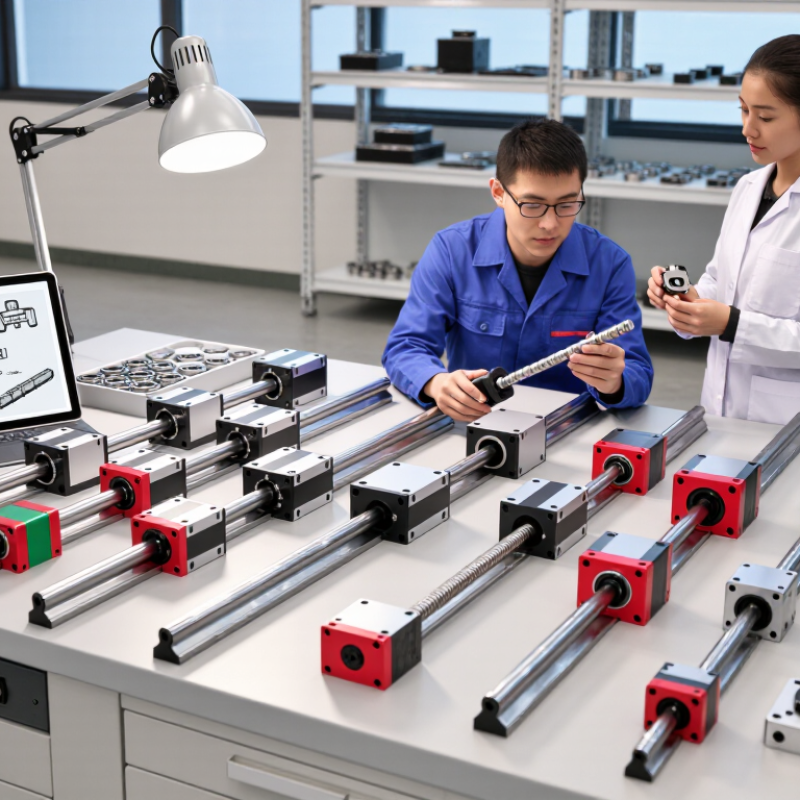
A China linear motion control supplier is a company based in China that designs, manufactures, or sources equipment for controlled movement along a straight path. Its products may include linear guides, ball screws, actuators, motion stages, motors, and control systems. Some suppliers make core parts; others integrate components into complete assemblies. The distinction matters.
In a packaging line, for example, a carriage may need to move repeatedly between two fixed points. The supplier should match travel length, load, speed, accuracy, and operating environment to the task.
A workable solution is not just a catalog part. Engineers may need to review drawings, mounting space, lubrication, and expected duty cycles.
Ask how tolerances are measured and what inspection records come with each shipment.
A reliable supplier explains limitations, not only advantages. Request technical datasheets, test results, lead times, and clear warranty terms. Check whether engineering support continues after installation.
A quick quote is useful, but it proves little. Factory visits or independent audits can add confidence, though they take time and may not reveal every production issue. Compare suppliers using the same load and accuracy requirements. Even then, specifications can look cleaner on paper than a machine feels on the shop floor. Leave room for testing.

China’s linear motion suppliers commonly offer guide rails, carriages, ball screws, linear modules, electric actuators, and positioning stages. These components serve packaging lines, inspection equipment, and factory automation. Small details matter. Rail length, carriage preload, screw lead, and motor torque all affect system performance.
Many suppliers also provide servo motors, drives, motion controllers, sensors, and connection cables. Some can machine mounting plates or assemble complete axes to match a customer’s drawings. Ask for load, travel speed, duty cycle, and operating conditions before requesting a recommendation. A useful technical quotation should state accuracy, repeatability, allowable load, and expected service intervals. Request test records when these figures are important. That step is easy to overlook. Installation guidance, CAD files, spare parts, and maintenance support may also be available, but service levels differ between suppliers. Check how they handle engineering changes and replacement components. Specifications can look precise on paper, yet real equipment may behave differently under vibration or uneven loading. A sample test under representative conditions can reveal gaps before full production.
The best China linear motion control supplier is defined by how well its products match the machine, not by a low quote alone.
A capable supplier can explain load limits, travel speed, repeatability, and expected service life in clear terms. Ask how a linear guide, actuator, or control unit performs under your actual operating conditions. Check drawings, material specifications, and inspection records. Numbers matter. Together, these details show whether the supplier understands the application or is simply offering a standard catalog item.
Quality evidence should include consistent production checks, traceable test results, and a clear process for handling defects. Ask for sample measurements, such as rail straightness or positioning repeatability, and compare them with your requirements. Engineering support matters, too. Can the team review mounting tolerances and suggest a practical adjustment? Delivery planning, spare-part availability, and responsive communication also affect long-term performance. No supplier is perfect. A missed detail in your own specification can cause problems, so leave room for technical review before ordering.
Tips: Share a simple load profile, duty cycle, and installation drawing. Ask the supplier to flag assumptions in writing. Then verify critical dimensions on a sample before full production.
A supplier’s brochure is only a starting point. Compare measured positioning accuracy, repeatability, load capacity, speed, and service life under your actual operating conditions. ISO 230-2:2014 specifies methods for testing the positioning accuracy and repeatability of numerically controlled machine-tool axes. Ask for test results across the full travel range, not just one point. Numbers need context. Check the test speed, payload, temperature, and measurement method. A small rail that performs well unloaded may behave differently under a heavy carriage.
Check quality records and engineering support, too. Request calibration traceability, inspection records, documented batch controls, and clear procedures for handling defects. Ask the supplier to explain how it selects a guide, screw, or actuator for your duty cycle. The International Federation of Robotics reported 553,052 industrial robot installations worldwide in 2022, up 5% from 2021, in World Robotics 2023. That growth makes dependable motion components important, but it does not prove any supplier’s quality. Compare sample parts and review references from similar applications. Also test response times for technical questions and replacement-part requests. I would not rely on a polished sample alone; production consistency is harder to judge, and buyers sometimes miss that.
Choosing a China-based linear motion control supplier should begin with your application, not a catalog. Define payload, travel, speed, acceleration, positioning accuracy, duty cycle, and mounting direction. A 30-kilogram vertical load demands different guides and brakes than a light inspection camera. Measure the real workspace. Small errors matter.
Ask the supplier to explain how its actuator, guideway, motor, and controller work together. Request load-life calculations, tolerance data, and test conditions. “High precision” means little without a stated method. Check whether repeatability is measured under your actual load, temperature, and speed. Supplier experience becomes visible in its questions. Will an engineer review your drawings? Can they suggest cable protection, lubrication, and limit-sensor placement? A reliable team should discuss failure modes, not only peak performance.
Look closely at manufacturing control. Ask how critical dimensions are measured, how batches are traced, and how design changes are approved. Independent quality certifications can help, but certificates never replace application testing. Verify technical documents, response times, spare-part planning, and remote troubleshooting arrangements. I have seen projects choose the lowest initial price and later pay for alignment work, noise, and lost production hours. That lesson is uncomfortable, but useful. Compare total ownership cost, not only unit price. Run a pilot under realistic dust, temperature, cycle count, and emergency-stop conditions. Record vibration, repeatability, motor temperature, and acoustic changes. A supplier willing to discuss weak points usually offers more dependable cooperation than one promising perfection.
Sierramotion engineers help customers design solutions to complex motion problems. Whether a simple coil, or a precision motion assembly working in vacuum, Sierramotion has the experience to create a solution that works the first time.