
Buying Profiled Aluminium can look like a simple choice between shapes and prices. In practice, the right profile depends on where it will be used, how it will be supported, and what conditions it must withstand. A section for a lightweight interior partition may not suit an exposed exterior frame. Small differences in wall thickness, alloy, or finish can affect fit, strength, and long-term appearance.
Details matter. Before requesting a quote, record the profile dimensions, required lengths, quantity, and any cutting or machining needs. Check drawings against the actual installation space; a few millimetres can complicate assembly. Ask suppliers for clear product specifications, tolerances, finish options, and available documentation. If appearance or fit is critical, request a sample. It is easier to spot an unsuitable edge, coating, or colour before a full order arrives.
This guide shares ten practical tips for comparing profiles, evaluating suppliers, and planning delivery. It also covers questions worth asking about packaging, lead times, and quality checks. Price matters, but the lowest quote may not include the service or consistency your project needs. There is no perfect checklist: project requirements vary, and specifications should be reviewed with a qualified professional when structural performance is important. A careful comparison can prevent avoidable delays—and some wasted material.
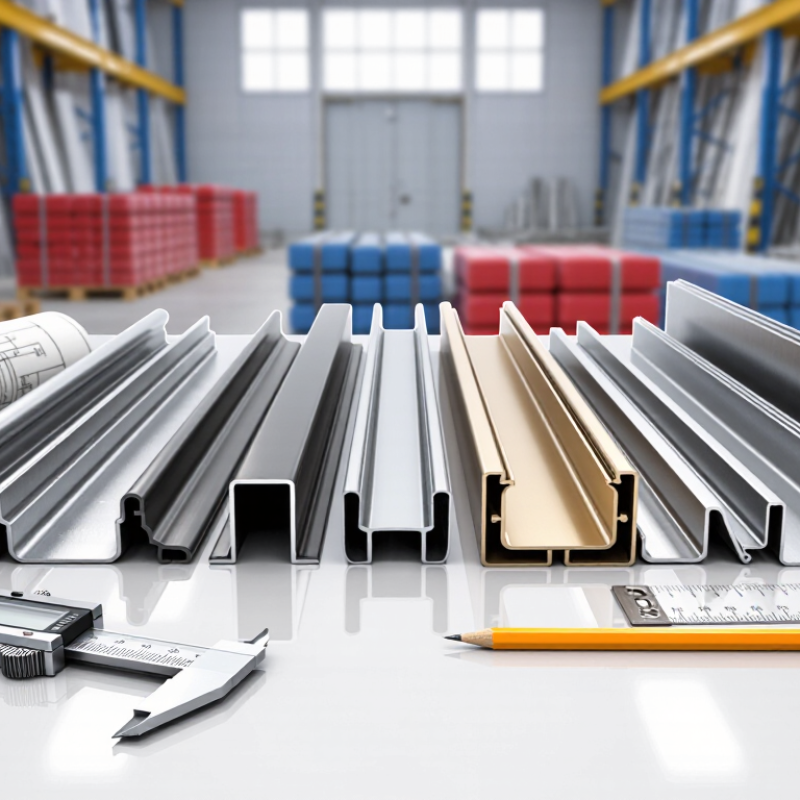
When buying profiled aluminium, define the job before comparing shapes or prices. Record the load, unsupported span, acceptable deflection, operating temperature, and exposure to moisture or chemicals. A roof rail, machine guard, and display frame may look similar on a drawing, yet require different wall thicknesses and connection details. Small details matter. In practice, a tidy CAD model can still hide a weak fixing point. Ask for calculations based on the actual support spacing and load direction, not just a catalogue load rating. Confirm alloy, temper, dimensional tolerances, and whether the quoted performance applies to the finished profile.
Specify the environment too. Outdoor salt spray, cleaning chemicals, and repeated contact can change the finish and maintenance needs. The Aluminum Association reports that recycling aluminium uses about 95% less energy than producing primary aluminium; this can inform material sourcing, but it does not prove a profile meets your structural or durability needs. Request clear recycled-content documentation alongside test data. For anodized or coated sections, check coating thickness and suitability for the site. Also verify how cut ends, drilled holes, and joints will be protected. These are easy to overlook. A small mismatch between the profile and its connector can cause rattling, uneven assembly, or premature wear. Specify the connection method early, and ask the supplier to confirm compatibility in writing.

If a profile operates across changing temperatures or connects to other materials, account for thermal movement in the application requirements. These representative coefficients show why aluminium profiles can expand more than steel; actual values vary by alloy and grade.
Choose the profile shape around the real load and installation space. A hollow tube can reduce weight, while a channel may make mounting easier. Fit comes first. Check wall thickness, corner radii, and clearances against the mating parts; a small mismatch can complicate assembly. If the section will be cut or drilled, confirm that its geometry leaves enough material near holes and fasteners. A sample extrusion can reveal problems that a drawing misses.
Alloy and temper affect strength, corrosion resistance, formability, and machining behavior. Select them for the operating environment, not strength alone. For example, a part exposed to moisture may need a different balance than an indoor bracket that will be machined after extrusion. Temper designations vary by alloy and process, so confirm the exact specification with a qualified supplier and request material documentation. Also check whether the chosen temper suits any later bending or joining. More strength is not always better. It can reduce formability or raise cost, and buyers sometimes specify it before confirming the actual loads. That deserves a second look. Share the expected loads, finish, tolerances, and production volume when requesting a quote; these details help suppliers recommend a workable combination.
| Tip | What to Check | Practical Guidance | Why It Matters |
|---|---|---|---|
| 1 | Define the application | List the profile’s loads, operating environment, temperature range, and intended service life. | These requirements help determine suitable geometry, alloy, temper, and surface finish before you request a quotation. |
| 2 | Choose a functional profile shape | Decide whether a standard solid, hollow, or semi-hollow shape meets the design requirements. Specify critical dimensions and allowable tolerances. | A simpler cross-section is generally easier to extrude. Complex hollow shapes may require more specialized tooling and process control. |
| 3 | Keep the design extrusion-friendly | Where possible, use reasonably uniform wall thicknesses, avoid abrupt thickness changes, and include practical corner radii. | Balanced sections can support more consistent metal flow during extrusion. The feasible design depends on the alloy, press, and profile dimensions. |
| 4 | Match the alloy to the job | Compare relevant properties such as strength, corrosion resistance, formability, weldability, and machinability. | Different aluminium alloys offer different combinations of properties; no single alloy is best for every application. |
| 5 | Consider common extrusion alloys | Alloys 6060 and 6063 are widely used for architectural and general-purpose extrusions. Alloy 6061 is often selected where strength and machining performance are important; 6005A is used in some structural applications. | These are general selection examples, not substitutes for checking the required product specification, dimensions, and mechanical properties. |
| 6 | Select the temper, not just the alloy | Specify the required temper, such as T5 or T6, and verify the applicable standard and property requirements for the exact alloy and product. | Temper describes the material’s processing condition and affects properties. T5 generally involves artificial ageing after cooling from extrusion; T6 involves solution heat treatment followed by artificial ageing. |
| 7 | Check strength and design limits | Review the specified minimum mechanical properties and confirm that the finished profile, connections, and supports meet the design loads. | Do not rely on an alloy or temper name alone: properties can depend on the product standard, section thickness, and testing requirements. |
| 8 | Plan for corrosion and finish | Consider exposure to moisture, salt, chemicals, and dissimilar metals. State whether the profile will be supplied mill-finished, anodized, painted, or with another specified finish. | The service environment and finishing process can affect appearance, corrosion performance, dimensions, and maintenance needs. |
| 9 | Agree dimensions and inspection | Document cross-section dimensions, length, straightness, surface requirements, tolerances, test methods, and the applicable product standard. | Clear acceptance criteria reduce ambiguity and make it easier to inspect delivered profiles consistently. |
| 10 | Evaluate tooling and total cost | Ask whether existing tooling is suitable or new dies are required. Compare tooling, minimum order quantities, finishing, packaging, and delivery costs. | The purchase price per unit is only one part of the cost; profile complexity, production volume, finishing, and logistics can also affect the total. |
When buying profiled aluminium, compare the supplier’s drawing with the dimensions your assembly actually needs. Check overall width, wall thickness, slot openings, and hole positions; a profile can look correct yet fail to fit a bracket by a few millimetres. Record the measurement points and reference surfaces, so you and the supplier are checking the same features. Small differences matter. Ask for the stated tolerances, not just nominal dimensions. Tolerances can depend on profile shape, wall thickness, and production method, so avoid assuming every feature shares one limit. If the fit is critical, request a sample and measure it with suitable calipers before approving a larger order. I’ve seen drawings that looked clear until someone noticed they measured from different edges. That is an easy mistake to repeat.
Surface finish deserves the same care. Specify whether the part should be mill finish, anodised, or coated, and describe the appearance you expect. Inspect samples under bright, even light for scratches, dents, visible die lines, and uneven colour. A finish that looks smooth in a photograph may show marks beside a window or under workshop lighting. Check whether the quoted dimensions apply before or after finishing; coatings can affect close-fitting slots and mating parts. If appearance matters, agree on an acceptable sample or written inspection criteria. A little uncertainty remains. Aluminium profiles can vary slightly between batches, so document which flaws are acceptable before production begins.
A low quoted price can hide costs in tooling, packaging, or rejected parts. Compare suppliers using the same drawing, alloy, temper, finish, and annual volume. Ask for itemized quotes and realistic lead times. Small details matter. Check how each supplier handles drawing revisions and dimensional problems. A clear response is useful evidence of a dependable process, though it cannot guarantee every batch will be perfect.
Request current quality certificates and material test reports, then check their scope. Do they cover the production site and processes making your profiles? Ask how alloy batches are identified and whether records can be linked to delivered goods. A certificate alone is not proof of consistent performance. If documentation is unclear, ask for clarification before placing a large order.
Customization can affect both price and delivery. Confirm tolerances, cut lengths, surface treatment, minimum order quantities, and any tooling charges in writing. Ask for a sample or first-article inspection, and check dimensions with suitable measuring tools. For coated profiles, inspect color and surface marks under consistent lighting. It is easy to focus too much on finish and overlook fit. Share the profile’s intended use, but have a qualified engineer review critical requirements; supplier advice is helpful, not a substitute for design verification.
A low price for profiled aluminium can hide costs that appear later. Request an itemised quotation covering alloy, temper, dimensions, tolerances, finish, tooling, minimum order quantity, and packaging. Compare offers against the same drawing and specification, not just the price per metre. A quote for a thinner wall or looser tolerance is not truly comparable. Small gaps matter. Ask whether protective film, corner guards, or export packing are included, especially if the profiles will travel a long distance. Check how long the quoted price remains valid, too; aluminium input costs and order quantities can change the final figure. It is tempting to choose the lowest number. That can be a mistake.
Lead times need the same close reading. Ask for separate estimates for drawing approval, production, packing, and transit. A stated “four weeks” may begin only after your final approval, not when the order is placed. Request a written schedule with key dates and ask what could delay it, such as capacity limits or a late specification change. Dates can move. Delivery terms should state who arranges freight, who unloads the truck, and where responsibility transfers. Confirm the delivery address, access for long bundles, packaging condition, and process for reporting damage. Build a modest buffer before installation. I would not treat an early estimate as a firm promise; suppliers can also be overly optimistic, and buyers sometimes delay approvals without noticing.
Sierramotion engineers help customers design solutions to complex motion problems. Whether a simple coil, or a precision motion assembly working in vacuum, Sierramotion has the experience to create a solution that works the first time.